In high-traffic urban areas, every square inch of space carries immense commercial value. Traditional single-sided signage only captures half of the potential audience, leaving significant revenue on the table. Consequently, smart city planners and advertisers are turning to dual-sided Kommersiële LED -skerms to capture foot traffic from both directions. This architectural shift effectively doubles the exposure without increasing the physical footprint of the installation. This guide explores how dual-sided technology transforms street poles and pedestrian walkways into high-yield advertising assets.
1. Doubling the Impact: Why Two Sides Are Better Than One
On a busy pedestrian street, people move in two primary directions at all times. A single-sided screen creates a “blind spot” for half of the crowd. Egter 'n tweesydige commercial LED display screen installation ensures that your message is visible to everyone, regardless of their walking direction.
Bi-Directional Attraction: Capture incoming and outgoing traffic simultaneously.
Verhoogde verblyftyd: Content stays in the viewer’s line of sight for a longer duration.
Hoër advertensievoorraad: Sell the front and back of the screen as two distinct ad placements.
Gevolglik bereik jy 'n baie hoër "per vierkante voet" doeltreffendheid vir jou advertensiespasie. Verder bied die simmetrie van 'n dubbelsydige vertoning 'n meer gebalanseerde en professionele voorkoms vir moderne stedelike meubels. Daarom verander jy 'n enkele paal in 'n tweerigting-inkomste-enjin.
2. Prime Scenarios: Light Poles and Walkway Centers
Die doeltreffendheid van 'n commercial LED display screen setup depends heavily on its placement within the urban flow.
Smart Street Light Poles: These are the most valuable assets in “Smart City” projects. Deur dubbelzijdige skerms op bestaande pale te monteer, kry jy 'n massiewe netwerk van uitstallings sonder bykomende konstruksie. Gevolglik verskaf hierdie skerms intydse inligting en advertensies op ooghoogte vir elke verbyganger.
Pedestrian Street Centers: Die plasing van 'n dubbelsydige uitstalling in die middel van 'n breë winkelstraat skep 'n visuele landmerk. Verder verseker die gesinchroniseerde inhoud aan beide kante 'n verenigde handelsmerkboodskap oor die hele plein.
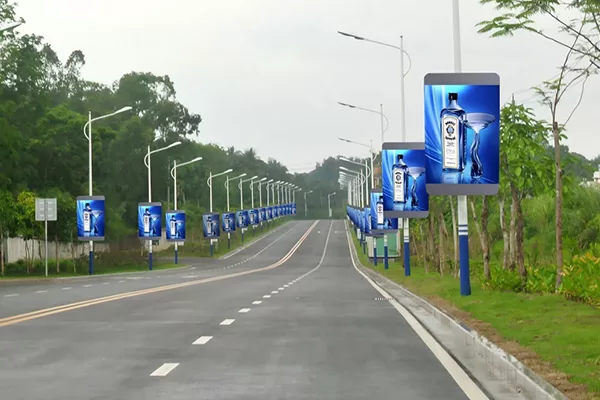
3. Maximizing ROI and “Floor Efficiency.”
| Kenmerk | Enkelsydige LED-skerm | Dual-Sided Commercial LED Display Screens |
| Gehoordekking | 50% (Eenrigting) | 100% (Tweerigting) |
| Advertensie-inkomstepotensiaal | Standaard | Double (2-in-1 Placements) |
| Ruimtebenutting | Laag | High (Maximum ROI per sqm) |
| Visuele estetiese | Klomp agterkant | Seamless, Symmetric Design |
Gevolglik betaal die aanvanklike belegging in dubbelzijdige hardeware vir homself baie vinniger terug deur verhoogde advertensieverkope. Furthermore, modern modular designs from Kommersiële LED -skerms spesialiste verseker dat die skerms skraal en liggewig is. Dit voorkom oormatige meganiese spanning op die ligpale terwyl hoë helderheid in direkte sonlig gehandhaaf word.
Gevolgtrekking: Die toekoms van stedelike reklame is tweerigting
In 'n mededingende mark kan jy nie bekostig om die helfte van jou potensiële kliënte te ignoreer nie.
Hou op om spasie op die agterkant van jou bordjies te laat mors. Omhels eerder die hoë-doeltreffende krag van dubbelzijdig Kommersiële LED -skerms to dominate the visual landscape of your city. Gevolglik sal jou advertensieplekke die mees gesogte liggings vir premium handelsmerke word. Ervaar die verskil wat 360-grade sigbaarheid vandag vir jou besigheid bring. Jou infrastruktuur verdien om twee keer so hard te werk vir jou sukses.