Regstreekse videoproduksieregisseurs en konsertgeleentheidkoördineerders sukkel voortdurend met 'n kritieke visuele fout met 'n hoë inset tydens groot arena-uitsendings. Wanneer 'n premium uitsaaikamera oor 'n massiewe verhoogagtergrond beweeg, verwoes lelike swart skanderingslyne, rolbande of erge skermflikkering dikwels die skoot. Gevolglik soek tegniese spanne gereeld aanlyn vir 'n definitiewe oplossing vir 'n frustrerende bedryfskwessie: "Hoe om LED-skermflikkering op kamera uit te skakel?"
Die hoofoorsaak van hierdie uitsaai-nagmerrie spruit direk uit 'n ongeoptimaliseerde hardeware-verfrissingstempo binne die verhoogvertoningsmodules. Wanneer professionele kamera-sluiters versnel om vinnigbewegende musikante vas te vang, ontbloot lae-verfris verhoogpanele hul interne uitlegfoute onmiddellik. Verkryging a 3840Hz LED-skerm los hierdie ingenieursbottelnek op, en verseker skoon, flikkervrye uitsaaimateriaal onder veeleisende arena-beligtingstoestande.
1. Die Tegniese Konflik: Sluiterspoed vs. Lae Verfrissingskoerse
Om te verstaan waarom tradisionele vertoonskerms op 'n musiekkonsertverhoog misluk, moet ingenieurs analiseer hoe digitale kameras lig opneem. ’n Standaardskerm werk sy sigbare beeld duisende kere per sekonde op, wat te vinnig gebeur vir die blote menslike oog om op te spoor. Professionele uitsaaikameras werk egter met hoë sluiterspoed (1/1000s aan 1/2000s of vinniger) om skerp, vervaagde rame van dansende kunstenaars vas te vang.
 Camera Shutter Opens (1/2000s) ──> Catches Low-Refresh LED Off-Cycle ──> ❌ Black Scan Lines & Flicker
 Camera Shutter Opens (1/2000s) ──> Catches 3840Hz High-Refresh Pulse ──> ♻️ Perfectly Solid, Clean Image
As die verhoogagtergrond teen 'n lae herlaaitempo werk (soos 'n basiese 1920Hz opstelling), maak die kamera-sluiter baie vinniger oop en toe as wat die diodes deur hul kraglusse kan beweeg. As 'n direkte gevolg neem die kamerasensor die presiese mikrosekondes op wanneer die LED-rye afskakel tydens hul polswydtemodulasie (PWM) siklus. Hierdie tydsberekeningswanpassing skep donker rollende horisontale strepe, erge kleurvervorming en skokkende flikkerende artefakte wat die regstreekse stroom ruïneer.
2. Die Ingenieursmiddel: Hoe 'n 3840Hz LED-skerm die voer stoor
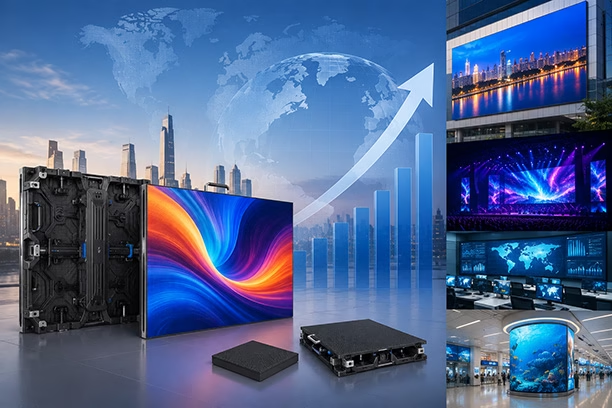
Die opgradering van jou verhooginfrastruktuur na 'n ware 3840Hz LED-skerm verhoog die beeldhertekeningfrekwensie aansienlik. Spesifiek, a 3840Hz paneel werk sy sigbare raam 3 840 keer elke enkele sekonde op, wat maklik professionele kamerasensors oortref.
                  Three-Tier High-Refresh Performance Grid:
 ┌──────────────────────────────────────────────────────────────────────┐
 │ 1. Fast Shutter Support: Eliminates lines at ultra-fast 1/2000s.    │
 │ 2. Moiré Minimization: Maintains smooth gray tones to block waves.   │
 │ 3. Fluid Color Blending: Prevents pixel breaking during fast pans.   │
 └──────────────────────────────────────────────────────────────────────┘
Absolute sluitervryheid: Omdat die diodes teen sulke uiterste frekwensies siklus, kan professionele kameras teen ultra-vinnige sluiterspoed skiet sonder om donker intervalle vas te vang.
Moire en golfonderdrukking: Die hoë frekwensie verseker gladde grysskaal-oorgange oor die skermoppervlak, wat voorkom dat golwende moiré-patrone van naby kunstenaarskote verdraai.
Foutlose kleurdiepte: Vinnige verversingsintervalle voorkom dat individuele kleurkanale uitmekaar breek, en hou gradiënte perfek glad tydens vinnige kamerapanne.
Kwantitatiewe uitsaaiprestasiematriks
| Bedryfsverkrygingsmetriek | Ouderwetse 1920Hz verhoogpanele | Premium 3840Hz LED-skerm |
| Maksimum veilige kamera sluiterspoed | Beperk; tipiese lyne verskyn hierbo 1/500s | Ultra-Hoog; bly skoon by 1/2000s of hoër |
| Rollende skanderingslyne op die skerm | Gereelde; vereis handmatige kamerasluiterverstellings | Zero lewer perfek gladde, lynvrye beelde |
| Live Stream Video Stabiliteit | Arm; stel oogstremming en sigbare skermflikkering bekend | Foutloos; verskaf stabiele, uitsaai-gereed beeldmateriaal |
| Geskiktheid vir Perskonferensies | Laag; flitsende kameraflitse veroorsaak uiterste skeuring van die skerm | Uitstekend; handhaaf gladde beeldkwaliteit onder flitsgloeilampe |
| Langtermyn-produksiewaarde | Beperk; beperk kreatiewe videokamerahoeke | Premium gee produksieregisseurs totale kameravryheid |
3. Kommersiële bewys: Die versekering van foutlose konsert- en perskonferensie-uitsette
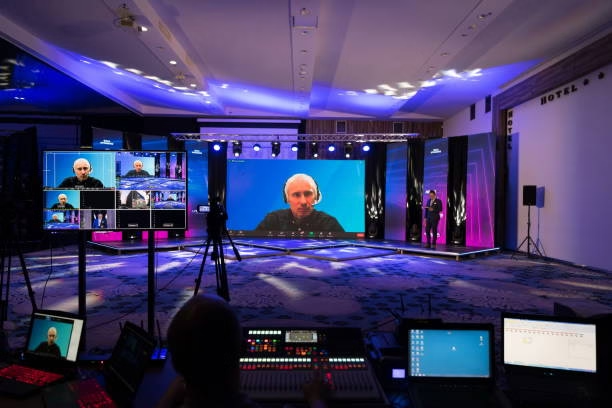
Vir hoëprofiel media-geleenthede soos 'n wêreldwye musiekkonsert of 'n uitvoerende perskonferensie, bepaal sekondêre fotoverspreiding en regstreekse stroomstabiliteit kommersiële sukses. Wanneer aanhangers slimfoonvideo's aanlyn deel of joernaliste hoëresolusiefoto's publiseer, moet jou verhoogagtergrond foutloos lyk.
High-Refresh 3840Hz Wall ──> Sharp Media Photos + Crisp Stream ──> Enhanced Brand Equity & Ad Income
Die keuse van 'n laer-graad skerm opsie om te bespaar op aanvanklike toerusting koste, onvermydelik terugvuur wanneer die gevolglike video bates lyk amateuristies of verwronge. Omgekeerd, die implementering van 'n ware 3840Hz LED-skerm waarborg dat elke enkele raam skerp, skerp en perfek gemeng bly. Hierdie tegniese stabiliteit beskerm jou mediabates, bou handelsmerkgesag en maksimeer jou geleentheid se advertensie-inkomste.
Gevolgtrekking: Elimineer uitsaai-artefakte proaktief
Ten slotte, die lewering van 'n meeslepende, hoë-end vermaak ervaring vereis verkryging van betroubare vertoon hardeware wat perfek koördineer met moderne kamera sensors.
Hou op dat afleidende swart skanderingslyne, rollende vervormingsbande en onverwagte skermflikkering jou regstreekse stroomkwaliteit in gevaar stel. Opgradering van jou venue-opstelling na ons 3840Hz LED-skerm skikking verseker absolute visuele presisie en kameraversoenbaarheid. Ons ontwerp elke hoë-verfris-paneelkonfigurasie om veeleisende uitsaaibehoeftes te hanteer, jou mediabates te beskerm en piekwerkverrigting oor miljoene rame te verseker.
Kontak ons tegniese ingenieursafdeling vandag nog om jou produksiespesifikasies te hersien en jou premium vertoontoerusting te beveilig.