En entornos de filmación profesionales, pantallas LED de paso fino se han convertido en una herramienta visual fundamental para estudios de transmisión, producción virtual XR y producción de videos comerciales. Sin embargo, muchos equipos de producción todavía se enfrentan a dos grandes retos a la hora de capturar pantallas LED con cámaras: efectos muaré y líneas de escaneo visibles.
Estos patrones no deseados pueden reducir la calidad de la imagen, dañar la coherencia visual y afectar la experiencia de producción final. Por lo tanto, elegir el derecho Tecnología de pantalla LED, optimizar la frecuencia de actualización, controlar la configuración de la cámara y seleccionar estructuras de visualización avanzadas se convierten en pasos esenciales.
Para los cineastas modernos, una película de alto rendimiento pantalla LED de paso fino No se trata sólo de la densidad de píxeles. En cambio, debe ofrecer un rendimiento de actualización estable, una reproducción de imágenes precisa y características amigables con la cámara.
Este artículo explica cómo Frecuencia de actualización de la pantalla LED, velocidad de obturación, diseño de máscara antirreflejos, tecnología LED COB y soluciones Micro LED trabajen juntos para eliminar patrones muaré y líneas de escaneo durante la filmación.
¿Qué causa el efecto Moiré en las pantallas LED durante el rodaje?
El efecto Moiré aparece cuando el sensor de la cámara captura la interferencia entre dos patrones repetidos:
- La estructura de píxeles de la pantalla LED
- La cuadrícula de píxeles del sensor de la cámara
Cuando estos patrones se superponen en ángulos o frecuencias específicas, la cámara produce ondas, rayas o distorsiones de color no deseadas.
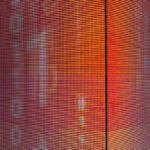
Por ejemplo, las pantallas LED tradicionales con tamaños de píxeles más grandes a menudo crean estructuras de píxeles visibles cuando se filman a distancias cercanas. Como resultado, las cámaras pueden capturar una distribución de brillo inconsistente entre los módulos LED.
Además, los entornos de producción virtuales aumentan este desafío porque:
- Las cámaras se acercan con frecuencia a la pared LED
- Las cámaras de alta resolución capturan más detalles de píxeles
- Las diferentes velocidades de fotogramas y velocidades de obturación afectan la sincronización de imágenes
Por lo tanto, los equipos de producción requieren Pantallas LED compatibles con cámaras que minimizan la interferencia de píxeles.
1. Elija pantallas LED con mayor frecuencia de actualización para reducir las líneas de escaneo
La frecuencia de actualización es uno de los factores más importantes que afectan el rendimiento de la pantalla LED durante la filmación.
La frecuencia de actualización describe cuántas veces la pantalla LED actualiza imágenes por segundo. Una frecuencia de actualización más alta crea una salida visual más fluida y reduce el parpadeo capturado por las cámaras.
Frecuencia de actualización de pantalla LED de 3840 Hz frente a 7680 Hz
Para muchas aplicaciones comerciales, un Pantalla LED de 3840Hz ya proporciona un rendimiento de imagen estable. Sin embargo, los entornos de filmación profesionales suelen exigir especificaciones más altas.
A Pantalla LED de 7680Hz ofrece varias ventajas:
- Mejor sincronización de la cámara
- Líneas de escaneo horizontales reducidas
- Menor visibilidad del parpadeo
- Rendimiento de filmación en cámara lenta mejorado
- Imágenes más estables bajo cámaras de alta velocidad
Especialmente en la producción virtual XR, las cámaras suelen utilizar diferentes ángulos de obturación y velocidades de cuadro. Por lo tanto, las frecuencias de actualización más altas brindan más flexibilidad a los equipos de producción.
Sin embargo, la frecuencia de actualización por sí sola no puede eliminar los efectos muaré. La estructura de la pantalla, el diseño de píxeles y el tratamiento óptico también desempeñan papeles importantes.
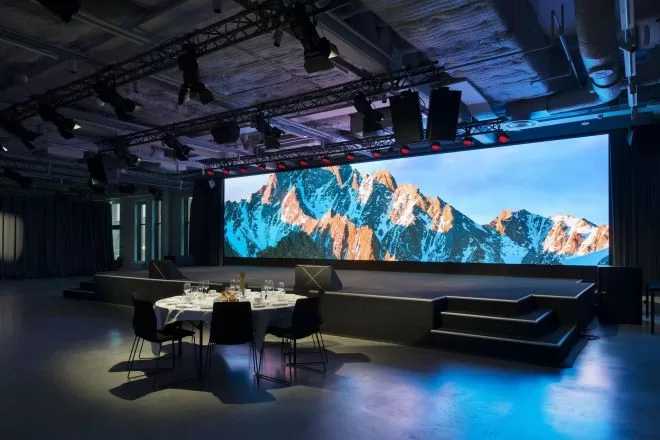
2. Haga coincidir la velocidad de obturación de la cámara con el rendimiento de la pantalla LED
Incluso con una pantalla LED de alta frecuencia de actualización, la configuración incorrecta de la cámara aún puede crear líneas de escaneo.
La velocidad de obturación de la cámara determina cómo el sensor captura los ciclos de actualización del LED.
Por ejemplo:
- Una velocidad de obturación no coincidente puede capturar patrones de actualización de LED incompletos.
- Una configuración de obturador sincronizada crea imágenes más limpias.
- Las velocidades de fotogramas más altas requieren una mejor respuesta de la pantalla LED.
Los equipos de filmación profesionales suelen ajustar:
- Ángulo de obturación
- Velocidad de fotogramas
- Configuración de exposición
- Frecuencia de sincronización de la cámara
Por lo tanto, los proveedores de pantallas LED deben proporcionar pantallas con un rendimiento de actualización estable para admitir un ajuste flexible de la cámara.
Una alta calidad Pantalla LED modular para producción virtual. debe mantener un brillo y un rendimiento de color constantes en diferentes condiciones de filmación.
3. Utilice la tecnología de pantalla LED de paso fino para obtener mejores resultados con la cámara
El tamaño de los píxeles afecta directamente la forma en que aparece una pantalla LED a través de la lente de una cámara.
Un tamaño de píxel más pequeño crea una superficie visual más suave porque los píxeles se vuelven menos visibles.
Las ventajas comunes de las pantallas LED de paso fino incluyen:
Estructura de píxeles más pequeña
Las pantallas LED de paso fino utilizan disposiciones de LED más ajustadas. Por lo tanto, las cámaras capturan una superficie de imagen más continua en lugar de puntos LED individuales.
Mayor resolución de imagen
Un tamaño de píxel más pequeño admite:
- producción 4k
- Creación de contenido 8K
- Toma de cámara en primer plano
- Fondos virtuales de gran formato
Mejor uniformidad visual
Los módulos LED de alta calidad reducen las diferencias de brillo entre píxeles. Como resultado, las cámaras capturan imágenes más naturales.
Para estudios de transmisión y escenarios XR, las pantallas LED de paso fino brindan un mejor equilibrio entre resolución, confiabilidad y rendimiento de filmación.
4. La tecnología de pantalla LED COB mejora el rendimiento compatible con la cámara
En comparación con los módulos LED SMD tradicionales, Pantallas LED COB ofrecen ventajas únicas para aplicaciones de filmación.
La tecnología COB empaqueta directamente chips LED en la superficie de la PCB. Este diseño reduce los espacios estructurales entre los componentes LED.
Como resultado, las pantallas LED COB proporcionan:
- Mayor protección de píxeles
- Planitud de superficie mejorada
- Dispersión de luz reducida
- Mejor rendimiento en tomas de primeros planos
Además, la tecnología COB LED crea una superficie de visualización más suave. Por lo tanto, las cámaras capturan menos reflejos y una estructura de píxeles menos visible.
Para proyectos de producción virtual XR de alta gama, las pantallas LED COB se están convirtiendo cada vez más en la solución preferida.
5. El diseño de máscara antideslumbrante reduce los reflejos y la distorsión de la imagen
Las condiciones de iluminación afectan fuertemente los resultados de filmación en pantallas LED.
En estudios y entornos de producción virtuales, múltiples fuentes de luz pueden crear reflejos en los paneles LED. Estos reflejos pueden aumentar la distorsión de la imagen y reducir la consistencia de la cámara.
Un máscara antideslumbrante ayuda a resolver este problema controlando la reflexión de la superficie.
Las pantallas LED antirreflejos de alta calidad proporcionan:
- Reflexión de la luz externa reducida
- Mejor rendimiento de contraste
- Imágenes de cámara más naturales
- Estabilidad de disparo mejorada
Además, los tratamientos de superficie mate ayudan a las cámaras a capturar fondos más limpios sin reflejos no deseados.
Por lo tanto, la tecnología antideslumbrante resulta especialmente valiosa para:
- Estudios de cine
- Producción televisiva
- Etapas virtuales XR
- Producción de vídeos publicitarios.
6. Las pantallas Micro LED brindan la solución definitiva para la producción virtual
La tecnología Micro LED representa la próxima generación en el desarrollo de pantallas LED.
A diferencia de las soluciones LED tradicionales, Micro LED utiliza chips LED extremadamente pequeños con un control de luz preciso.
Las ventajas clave incluyen:
- Paso de píxeles ultrafino
- Control de brillo excepcional
- Alta relación de contraste
- Precisión de imagen superior
- Excelente compatibilidad con la cámara
Para estudios de producción virtual a gran escala, las pantallas Micro LED pueden proporcionar fondos muy realistas y al mismo tiempo reducir los riesgos de muaré.
Aunque la tecnología Micro LED actualmente requiere una mayor inversión, ofrece grandes ventajas para aplicaciones de producción de películas premium.
Comparación: diferentes tecnologías de pantallas LED para filmar
| Tecnología de pantalla LED | Control de muaré | Rendimiento de la cámara | Aplicación recomendada |
|---|---|---|---|
| Pantalla LED SMD estándar | Medio | Adecuado para vídeo normal | exhibidores comerciales |
| Pantalla LED de paso fino | Alto | Buen rendimiento en primeros planos | Estudios de transmisión |
| Pantalla LED COB | muy alto | Excelentes resultados de cámara | producción XR |
| Pantalla micro LED | Excelente | Producción virtual premium | Estudios de cine |
¿Cómo seleccionar la pantalla LED modular adecuada para disparar con cámara?
Al elegir un pantalla LED modular para filmar, los compradores deben evaluar varios factores.
1. Frecuencia de actualización
Elegir:
- 3840 Hz para aplicaciones comerciales profesionales
- 7680 Hz para entornos de radiodifusión y XR exigentes
2. Paso de píxeles
Un tamaño de píxel más pequeño mejora:
- Tiro a corta distancia
- Detalles de la imagen
- Realismo de fondo
3. Tratamiento superficial
Los acabados antirreflejos y mate reducen:
- Problemas de reflexión
- Interferencia de luz
- Artefactos de cámara
4. Tecnología de embalaje LED
Las soluciones COB y Micro LED brindan una mejor compatibilidad con la cámara que las estructuras LED tradicionales.
5. Estabilidad del sistema
Una pantalla LED profesional debe mantener:
- Brillo uniforme
- Calibración de color precisa
- Transmisión de señal estable
- Rendimiento consistente del módulo
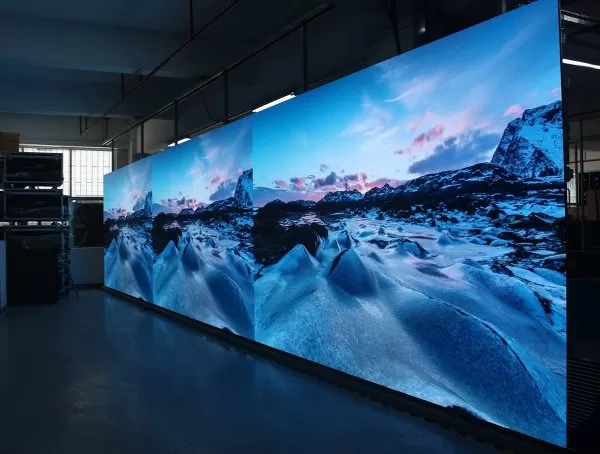
Por qué las pantallas LED modulares D-King están diseñadas para filmaciones profesionales
D-King se centra en soluciones de pantallas LED modulares personalizadas para aplicaciones comerciales y profesionales exigentes.
Nuestras pantallas LED integran tecnologías avanzadas, que incluyen:
- Diseño de alta frecuencia de actualización
- Módulos LED de paso fino
- Estructuras ópticas compatibles con las cámaras
- Soluciones para superficies antideslumbrantes
- COB y tecnologías LED avanzadas
Por lo tanto, Pantallas LED D-King Ayude a los equipos de producción a lograr imágenes más limpias, fondos más fluidos y experiencias visuales más realistas.
Ya sea que se utilicen en estudios de transmisión, escenarios de producción virtual XR o entornos de filmación comerciales, nuestras soluciones brindan un rendimiento confiable para la creación de contenido moderno.
Conclusión: reduzca el efecto muaré y las líneas de escaneo con la solución de pantalla LED adecuada
Un solo factor no provoca efectos muaré ni líneas de exploración. Más bien, resultan de la interacción entre la estructura de la pantalla LED, la frecuencia de actualización, la configuración de la cámara y las condiciones de iluminación.
Para lograr resultados de filmación profesionales, los equipos de producción deben combinar:
- Pantallas LED de alta frecuencia de actualización
- Tecnología de paso de píxeles finos
- Sincronización adecuada de la cámara
- Diseño óptico antideslumbrante
- Soluciones COB o Micro LED
Seleccionando el derecho pantalla LED de paso fino, los cineastas pueden lograr imágenes más fluidas, menos artefactos visuales y resultados de producción de mayor calidad.
Para transmisiones, producción virtual XR y aplicaciones de estudio, un amigable con la cámara Solución de pantalla LED ya no es opcional. Se ha convertido en un factor clave a la hora de crear contenido visual realista y profesional.