En la moderna “Economía de la Experiencia”, las limitaciones físicas de la arquitectura comercial están siendo desafiadas por la fluidez digital. Para los sectores hotelero y minorista, el modelo tradicional de “renovación estática”, donde un espacio se diseña para un propósito y permanece sin cambios durante años, se está volviendo obsoleto. Hoy en día, un lugar debe ser un restaurante durante el día, un salón lleno de energía durante la noche y una galería de arte inmersiva o una plataforma de lanzamiento de productos durante el fin de semana.
El catalizador tecnológico de esta transformación es la pantallas publicitarias LED modulares para interiores en formatos modulares. Al utilizar cubos LED modulares y unidades geométricas, los propietarios de empresas pueden crear "espacios programables". Esta evolución permite "Reskinning con un clic", convirtiendo una inversión interior única en un "activo de escena" dinámico que genera el interés recurrente del consumidor. Este artículo explora cómo la tecnología LED modular redefine la versatilidad comercial y el potencial de ingresos.
1. La muerte de la renovación estática: el auge del retorno de la inversión basado en la experiencia
Durante décadas, el ROI (Retorno de la Inversión) de un espacio comercial estuvo ligado a la durabilidad de su decoración. Sin embargo, en la era de las redes sociales y los rápidos ciclos de tendencias de consumo, la “permanencia” se ha convertido en un lastre. Un restaurante con una temática estática puede perder su “Instagrammability” dentro de seis meses.
De la decoración fija a los activos fluidos
Pantallas publicitarias LED modulares para interiores han pasado de ser simples pantallas de información a convertirse en la “piel” misma del edificio. Al reemplazar el papel tapiz, la pintura o los accesorios físicos tradicionales con cubos LED modulares, el propietario de un lugar obtiene la capacidad de reprogramar la atmósfera sin tener que cerrar por obras. Este cambio reduce la “fatiga de la renovación” y permite que la empresa siga siendo relevante en un mercado en rápido movimiento.
La mentalidad de "suscripción"
Imagine una sala de exposición que se “suscribe” a diferentes estéticas de temporada. En primavera, las paredes florecen con flores de cerezo digitales; En invierno, se transforman en un palacio de hielo futurista. Las unidades LED modulares hacen posible este modelo de "Suscripción de escena", lo que garantiza que la primera y la décima visita del cliente se sientan igualmente novedosas.
2. Geometría modular: cubos, triángulos y el arte de la reconfiguración
El poder de la tecnología LED moderna reside en su modularidad. A diferencia de las pantallas planas tradicionales, los cubos LED modulares permiten una integración arquitectónica tridimensional.
Rompiendo la barrera 16:9
La mayoría de los displays comerciales se limitan al formato rectangular estándar. Las unidades modulares, sin embargo, rompen estos límites. Los diseñadores pueden apilar cubos para crear pilares digitales, suspenderlos como candelabros brillantes o esparcirlos por el techo para simular un cielo fragmentado. Esta flexibilidad estructural asegura que el pantallas publicitarias LED de interior complementar la identidad única de la marca en lugar de dictarla.
Instalación rápida y conectividad perfecta
Los sistemas modulares modernos utilizan mecanismos de "bloqueo rápido" y puentes de datos inalámbricos. Esto significa que una galería puede reconfigurar su diseño de exhibición en cuestión de horas. Debido a que cada cubo es una unidad independiente pero sincronizada, el contenido digital fluye sin problemas a través de formas 3D complejas, manteniendo una claridad de alta resolución desde todos los ángulos de visión.
3. “Reskinning con un clic”: la practicidad del cambio de escena
El término "Reskinning con un clic" se refiere a la capacidad de un sistema de control centralizado para revisar todo el entorno visual a través de un único comando de software.
El estudio de caso del restaurante multiusos
Un restaurante de alta gama puede utilizar cubos LED modulares para gestionar la transición del “día a la noche”:
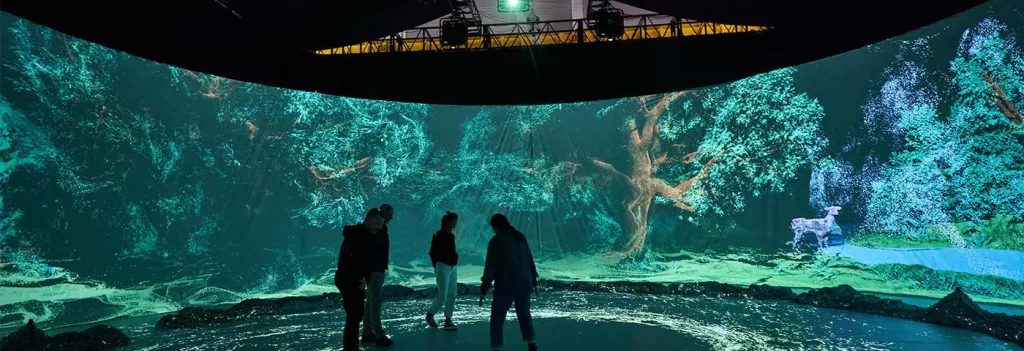
Almuerzo (12:00 p. m.): Las pantallas muestran escenas de bosques naturales y suaves y luz solar ambiental para crear una atmósfera de comedor tranquila y orgánica.
Hora del cóctel (6:00 p. m.): La “piel” de la habitación cambia a una sofisticada textura metálica con animaciones de oro líquido que se mueven lentamente, elevando el valor percibido de las bebidas.
Tarde en la noche (22:00): Los cubos se sincronizan con la música y se transforman en esculturas de luz pulsante de alto contraste para crear un ambiente de fiesta lounge.
La sala de exposición del futuro
En una sala de exposición de coches o en una boutique de moda, pantallas publicitarias LED modulares para interiores permita que el fondo coincida con el producto específico en exhibición. Si un cliente mira un SUV todoterreno, la habitación se convierte en una escarpada cadena montañosa. Si se trasladan a un sedán de lujo, los cubos cambian a un entorno urbano minimalista y de alta costura. Este nivel de personalización aumenta la participación del consumidor y las tasas de conversión.
4. Transformar el gasto de capital (CAPEX) en activos de escena
Tradicionalmente, el dinero gastado en diseño de interiores es un “costo irrecuperable”: se deprecia con el tiempo. Las instalaciones LED modulares invierten esta lógica al convertir el interior en un activo digital.
El contenido como nueva moneda
Cuando posee una infraestructura LED modular, su "decoración" es esencialmente un archivo digital. Las marcas pueden colaborar con artistas digitales para crear “máscaras” exclusivas o experiencias de marca. Esto permite que un lugar monetice sus paredes al albergar “ventanas emergentes digitales” para marcas asociadas, creando efectivamente una nueva fuente de ingresos a través del espacio de medios.
Sostenibilidad a través de la longevidad digital
Los cubos LED modulares reducen el desperdicio ambiental asociado con la redecoración constante. En lugar de descartar materiales físicos como madera, plástico o tela cada vez que una marca actualiza su apariencia, el propietario simplemente actualiza el software. Esta “Renovación sin Residuos” se alinea con los objetivos de sostenibilidad global al tiempo que proporciona una estética superior.
5. Sinergia técnica: integración sensorial más allá de la vista
Para lograr verdaderamente un “Espacio Programable”, el pantallas publicitarias LED de interior debe funcionar en armonía con otros sensores ambientales.
Respuesta interactiva: Los cubos LED modulares pueden equiparse con sensores de movimiento. Cuando un cliente pasa por un pilar digital, el contenido "reacciona": ondulando como el agua o cambiando de color según su proximidad.
Sincronización de iluminación: Al utilizar protocolos DMX, los cubos pueden dictar el comportamiento de la iluminación ambiental de la habitación. Cuando el contenido LED se vuelve “Ocean Blue”, los focos inteligentes de la habitación ajustan su temperatura para igualarla, creando una “burbuja” inmersiva de 360 grados.
Emparejamiento acústico: El moderno software de cambio de escena permite que el sistema de audio cambie las listas de reproducción simultáneamente con el "reskinning" visual, lo que garantiza una experiencia sensorial coherente.
6. Implementación Estratégica: Mejores Prácticas para Espacios Comerciales
Implementar una estrategia LED modular requiere algo más que comprar pantallas; Requiere un plan estructural.
Selección de tono de píxel: Para entornos interiores donde los clientes están cerca de las pantallas, una separación de píxeles pequeña (por ejemplo, P1,5 a P2,5) es esencial para garantizar que las imágenes permanezcan nítidas y no parezcan "pixeladas".
Facilidad de mantenimiento: Los cubos modulares deben contar con acceso de "servicio frontal". Esto permite a los técnicos cambiar un solo módulo sin desmantelar toda la estructura, lo que garantiza que la empresa nunca experimente un "tiempo de inactividad visual" no planificado.
Sistema de gestión de contenidos (CMS): Un CMS robusto basado en la nube es el "cerebro" de un espacio programable. Debe ser lo suficientemente intuitivo para que el gerente de un restaurante cambie una escena a través de una tableta o un teléfono inteligente.
7. Conclusión: El espacio físico como lienzo vivo
la integracion de pantallas publicitarias LED modulares para interiores Marca el final de la “era estática” de los interiores comerciales. Al adoptar la modularidad y la fluidez digital, los restaurantes, las salas de exposición y los espacios de arte pueden trascender sus fronteras físicas.
La capacidad “One-Click Reskinning” transforma una habitación en un lienzo vivo que se adapta a la hora del día, el tipo de evento o el estado de ánimo del cliente. Esta tecnología garantiza que una empresa nunca esté "anticuada", sino que esté en constante evolución. En el futuro del comercio minorista y la hostelería, los espacios de mayor éxito no serán los que se construyan de forma más sólida, sino los que estén programados de forma más inteligente. Un cubo LED modular no es sólo una pantalla; es una puerta de entrada a infinitas posibilidades atmosféricas.