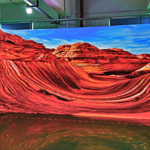
Ao selecionar um display LED modular, muitos compradores perguntam: "Qual é a verdadeira diferença entre telas LED internas e externas? Uma tela LED externa pode ser instalada em ambientes internos?"
Embora ambos os sistemas utilizem tecnologia LED para exibir imagens e vídeos, seus projetos focam em requisitos ambientais completamente diferentes.
As principais diferenças entre Telão LED interno vs externo as soluções incluem:
- Requisitos de brilho
- Nível de proteção
- Estrutura do módulo
- Durabilidade dos materiais
- Ambiente de instalação
Um telão LED para exterior é projetado para resistir à luz solar, chuva, poeira e mudanças de temperatura, enquanto um telão LED para interior se concentra mais no conforto visual, precisão de cores e visualização a curta distância.
A escolha do tipo de monitor correto com base no ambiente de instalação garante melhor qualidade de imagem, confiabilidade e eficiência operacional.
Qual é a diferença entre o brilho do display LED interno e externo?
Por que as telas LED externas precisam de maior brilho?
O brilho é uma das diferenças mais importantes entre os displays LED internos e externos.
Ambientes externos expõem as telas de LED a forte luz ambiente, especialmente à luz solar direta durante o dia.
Para manter uma visibilidade clara, os telões LED para exteriores geralmente exigem:
- Brilho acima 1.500 lêndeas
- Níveis de brilho mais altos para aplicações de luz solar direta
- Design óptico otimizado para visualização externa
Para locais expostos à luz solar intensa, como:
- Fachadas de edifícios
- Estádios
- Painéis publicitários rodoviários
- Exteriores de shopping
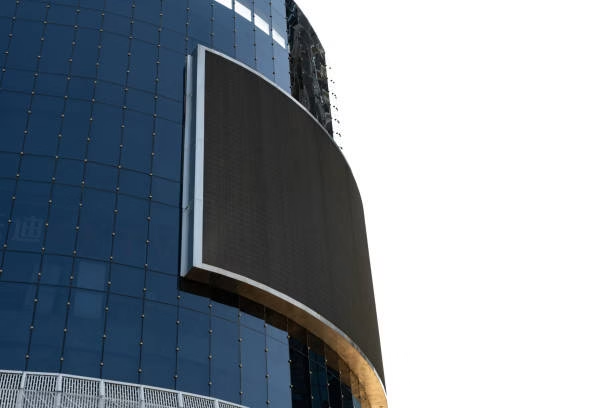
O brilho do LED pode precisar atingir 5.000 lêndeas ou superior para manter a visibilidade da imagem sob a luz solar do meio-dia.
Por que o brilho excessivo não é adequado para uso interno?
Ambientes internos geralmente possuem condições de iluminação controladas.
A maioria dos displays LED internos operam em torno de:
800-1500 lêndeas
Usar um display LED externo de alto brilho em ambientes internos pode causar:
- Desconforto ocular
- Brilho excessivo
- Experiência de visualização reduzida
- Maior consumo de energia
As telas LED internas são projetadas para distâncias de visualização mais próximas, onde o equilíbrio do brilho é mais importante do que a saída máxima de luz.
Como a classificação de proteção afeta os monitores LED internos e externos?
Por que as telas LED externas exigem proteção IP65?
Os displays LED para exteriores devem operar sob condições climáticas variáveis.
Um típico Tela LED IP65 fornece:
- Proteção contra poeira
- Resistência a jatos de água
- Melhor confiabilidade externa
A classificação IP é especialmente importante para:
- Exposição à chuva
- Mudanças de umidade
- Acúmulo de poeira
- Flutuações de temperatura externa
Grandes displays externos também exigem proteção estrutural adicional porque a pressão do vento pode criar estresse mecânico significativo.
De que proteção adicional um telão LED para exterior precisa?
Além do desempenho à prova d'água, os módulos LED para exteriores geralmente incluem:
Proteção UV
Os componentes LED para exteriores requerem materiais resistentes aos raios UV para evitar:
- Desbotamento da cor
- Deformação plástica
- Envelhecimento superficial
Resistência à corrosão
Ambientes externos podem conter:
- Umidade
- Ar salgado
- Poluentes industriais
Os materiais e revestimentos devem resistir à exposição a longo prazo.
Projeto de carga de vento
Grandes telas de LED para exteriores precisam de cálculos estruturais para lidar com as forças do vento.
Quanto maior o tamanho da tela, maior será o impacto da pressão do vento sobre:
- Estrutura do gabinete
- Quadro de instalação
- Sistema de suporte
Como os módulos LED são projetados de maneira diferente para aplicações internas e externas?
O que torna os módulos LED externos mais duráveis?
Os módulos LED externos são projetados para proteção ambiental.
Os recursos típicos incluem:
- Armários resistentes às intempéries
- Máscaras tratadas com UV
- Estruturas de módulos impermeáveis
- Design de vedação aprimorado
- Componentes resistentes à temperatura
O objetivo é manter a operação estável apesar das mudanças ambientais.
Por que os módulos LED internos se concentram mais na qualidade da imagem?
Os displays LED internos geralmente são visualizados em distâncias mais curtas.
Portanto, os designers priorizam:
- Maior taxa de contraste
- Melhor precisão de cores
- Afinação de pixels finos
- Desempenho suave em tons de cinza
As aplicações internas típicas incluem:
- Salas de conferência
- Shopping centers
- Centros de controle
- Lojas de varejo
- Estúdios de transmissão
A prioridade são os detalhes visuais em vez da resistência ambiental extrema.
Os painéis LED para exteriores podem ser usados em ambientes internos?
O que acontece quando uma tela LED externa é instalada em ambientes internos?
Tecnicamente, um telão LED para exterior pode funcionar em ambientes internos, mas geralmente não é a solução ideal.
As desvantagens potenciais incluem:
Brilho excessivo
Alto brilho projetado para ambientes com luz solar pode parecer desconfortável em ambientes internos.
Maior consumo de energia
As telas externas exigem LEDs mais potentes, resultando em maior consumo de eletricidade.
Otimização Visual Reduzida
As distâncias de visualização em ambientes internos exigem um desempenho de imagem mais preciso, o que pode não ser a prioridade dos designs externos.
Portanto, usar um telão LED para exterior em ambientes internos pode aumentar os custos sem melhorar a experiência do usuário.

Comparação de telas LED internas e externas
Qual tipo de display LED é mais adequado para diferentes aplicações?
| Fator de comparação | Telão LED interno | Telão LED externo |
|---|---|---|
| Nível de brilho | Geralmente 800-1500 lêndeas | Geralmente acima de 1.500 lêndeas, maior para áreas com luz solar |
| Ambiente | Condições internas controladas | Exposição ao clima ao ar livre |
| Classificação de proteção | Requisitos limitados de impermeabilização | Proteção IP65 ou superior |
| Design de materiais | Concentre-se na cor e na qualidade da imagem | Concentre-se na durabilidade e resistência às intempéries |
| Resistência UV | Geralmente não é obrigatório | Necessário para uso externo de longo prazo |
| Aplicativos comuns | Varejo, salas de reunião, estúdios | Painéis publicitários, estádios, áreas de transporte |
Como selecionar o display LED modular correto?
Guia de seleção de display LED com base na aplicação
Antes de comprar um display LED modular, os compradores devem avaliar:
1. Local de instalação
Perguntar:
- Interior ou exterior?
- Exposição direta à luz solar?
- Distância dos espectadores?
- Condições meteorológicas?
O ambiente de instalação determina o nível de proteção e o brilho necessários.
2. Visualização da distância
As telas internas geralmente são visualizadas de uma distância menor.
Isso requer consideração de:
- Distância de pixels
- Resolução
- Detalhe da imagem
As telas externas geralmente priorizam:
- Brilho
- Visibilidade
- Durabilidade
3. Condições Operacionais
Considerar:
- Faixa de temperatura
- Umidade
- Exposição à poeira
- Acessibilidade de manutenção
Um monitor projetado para o ambiente errado pode ter vida útil reduzida e custos de manutenção mais elevados.
O que os compradores devem verificar ao comprar telas LED?
Lista de verificação de aquisição para telas LED modulares
| Fator de Avaliação | Principais considerações |
|---|---|
| Brilho | Corresponde às condições de iluminação ambiente? |
| Classificação de proteção | O nível de IP é adequado para o local de instalação? |
| Projeto do Módulo | Inclui a proteção ambiental necessária? |
| Distância entre pixels | A qualidade da imagem é adequada à distância de visualização? |
| Gestão Térmica | Ele pode manter uma operação estável? |
| Método de manutenção | Requisitos de manutenção dianteira ou traseira |
Um fornecedor profissional de telas LED deve recomendar produtos com base nos requisitos da aplicação, em vez de usar o mesmo tipo de tela para cada projeto.
A escolha entre telas LED internas e externas começa com o meio ambiente
A comparação de Telões LED internos vs externos não se trata de qual tecnologia é melhor, mas de qual design corresponde à aplicação.
Os displays LED internos concentram-se no equilíbrio do brilho, na precisão das cores e na qualidade de visualização de perto. Telões LED para exteriores priorizam alto brilho, proteção IP65, resistência UV e durabilidade estrutural.
A seleção do display LED modular correto requer a avaliação das condições de instalação, distância de visualização, exposição ambiental e requisitos operacionais de longo prazo.
D-REI fornece soluções de display LED modulares personalizadas, ajudando os clientes a selecionar sistemas LED internos e externos adequados com base nos ambientes do projeto e nos requisitos de desempenho.