Nos últimos anos, a integração da tecnologia nas artes performáticas evoluiu significativamente. Entre esses desenvolvimentos, display LED com sensor de pressão sistemas remodelaram a paisagem dos palcos de dança modernos. Esses pisos inteligentes respondem ao movimento humano com visuais dinâmicos, oferecendo um novo nível de interatividade entre artistas, designers de iluminação e público.
Do passivo ao interativo: uma mudança de paradigma no design de palco
Os palcos de dança tradicionais dependiam principalmente de sinais de iluminação estática e visuais pré-programados. No entanto, o público moderno espera mais. Portanto, a demanda por ambientes responsivos impulsionou a adoção de telhas LED sensíveis à pressão. Ao contrário dos pisos de exibição passivos, esses sistemas detectam a pressão dos pés, os padrões de movimento e a intensidade, desencadeando mudanças visuais em tempo real.
Essa transformação oferece aos coreógrafos um conjunto de ferramentas dinâmico. Em vez de ensaiar o alinhamento da iluminação, os dançarinos agora podem ativar os recursos visuais por conta própria. Consequentemente, as performances parecem mais espontâneas e envolventes, promovendo um envolvimento mais profundo do público.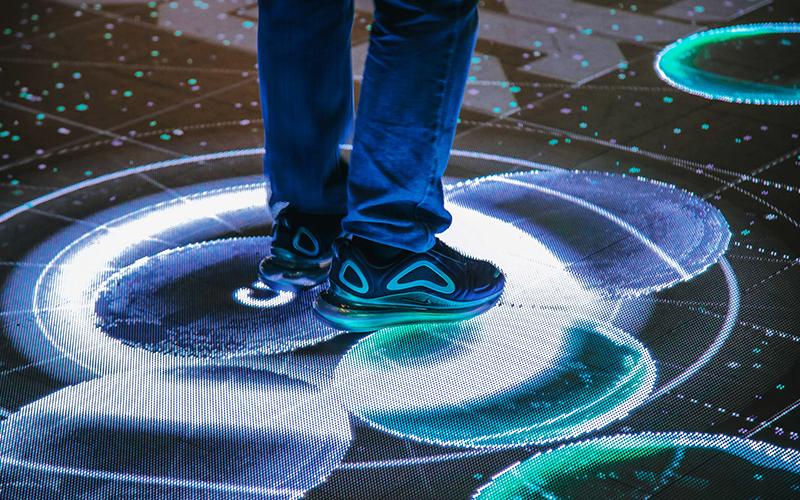
Como funciona a tecnologia de detecção de pressão em telas LED
No centro destes sistemas está uma arquitetura em camadas. Sob uma superfície durável de vidro temperado ou policarbonato, sensores de pressão são incorporados diretamente acima dos módulos LED. Quando um dançarino pisa ou se move, o sistema registra a localização precisa e a intensidade da pressão.
Simultaneamente, uma placa de controle interpreta esses dados e os mapeia para respostas visuais – mudanças de cores, transições de imagens, trilhas de luz ou animações sincronizadas. Este feedback em tempo real melhora não apenas a estética, mas também desempenho, tempo e coordenação espacial.
Versatilidade visual: design sem restrições
Porque display LED com sensor de pressão os ladrilhos são modulares, os projetistas podem criar configurações personalizadas: palcos quadrados, layouts circulares, pistas ou até mesmo elevações baseadas em escadas. Além disso, cada módulo suporta milhões de cores e resolução em nível de vídeo, permitindo animação em alta definição.
Por exemplo, um espetáculo de dança contemporânea pode apresentar um padrão de onda que percorre a pista, seguindo cada passo. Da mesma forma, a narrativa interativa pode usar recursos visuais do chão para imitar ondulações, fogo, sombras ou partículas explosivas, dependendo da coreografia.
Aprimorando a coreografia por meio de feedback em tempo real
Os artistas não precisam mais sincronizar apenas com sinais de iluminação pré-cronometrados. Com painéis LED responsivos, os dançarinos recebem feedback imediato com base em suas posições e movimentos. Esse interação bidirecional entre o dançarino e o palco fortalece a precisão do tempo.
Além disso, os limites de pressão podem ser personalizados. Toques leves podem ativar uma animação, enquanto pisadas mais fortes acionam outra. Essa sobreposição programável oferece aos coreógrafos infinitas possibilidades criativas, mantendo o controle.
Benefícios para produção de eventos e shows ao vivo
Além dos benefícios artísticos, pisos interativos de LED melhorar a logística. Esses sistemas são fácil de calibrar, rápido de instalare suporta controle plug-and-play por meio de DMX, ArtNet ou software proprietário.
Em produções ao vivo, os produtores podem mapear facilmente as entradas dos artistas em tempo real e combiná-las com outros elementos do palco, como neblina, lasers ou mapeamento de projeção. Além disso, a integração de aplicativos móveis ou tablets permite que os diretores ajustem a sensibilidade e o conteúdo instantaneamente.
Como resultado, a tecnologia reduz significativamente o tempo de configuração, a complexidade do ensaio e os requisitos da equipe.
Durabilidade e segurança em ambientes de alta intensidade
Os estágios de desempenho exigem construção robusta. As telhas de LED com sensor de pressão usadas em aplicações de dança apresentam Gabinetes com classificação IP65, revestimentos antiderrapantes e superfícies resistentes a impactos. A maioria dos sistemas pode suportar mais de 1.000 kg/m² de pressão, tornando-os seguros mesmo para coreografias em grupo ou acrobacias.
Além disso, suportam longas horas de funcionamento. Sistemas avançados de gerenciamento térmico evitam o superaquecimento, garantindo brilho consistente e fidelidade de cores durante apresentações ou festivais prolongados.
Principais aplicações em locais de entretenimento
Hoje, os pisos com telas LED com sensor de pressão são amplamente implantados em:
Produções de dança teatral
Programas de talentos na TV e competições musicais
Parques temáticos e exposições interativas
Instalações de arte e pisos de museus
Palcos de concertos e sets de DJ
Vitrines de marcas corporativas
Esta flexibilidade demonstra como o piso LED inteligente se tornou um inovação intersetorial. Ele combina narrativa digital com interação física de uma forma que a iluminação tradicional não consegue.
O futuro dos ambientes de palco responsivos
Como tecnologia de sensores evoluir e a inteligência artificial se integrar ao controle de iluminação, os pisos com telas de LED se tornarão ainda mais inteligentes. Prevemos sistemas que ajustem o brilho com base na luz ambiente ou prevejam o movimento do dançarino usando visão alimentada por IA.
Além disso, módulos sem fio e blocos alimentados por bateria aumentarão ainda mais a flexibilidade para eventos externos e pop-up. À medida que a arte performática se torna mais experiencial, as plataformas LED interativas se tornarão indispensáveis no design de produção.
Conclusão: Pressão + Precisão = Imersão
Resumindo, displays LED com detecção de pressão oferecem potencial incomparável para ambientes de palco modernos. Eles transformam espaços tradicionais de performance em telas interativas, capacitando os artistas a quebrar fronteiras criativas.
Com sua estrutura modular, design robusto e feedback avançado de sensores, esses pisos não são apenas uma tendência, mas uma mudança de longo prazo na filosofia de design de palcos.
Para qualquer produtora, gerente de local ou diretor criativo que queira elevar o envolvimento do público e a narrativa visual, Assim, integrando pisos de display LED sensíveis à pressão é o próximo passo lógico.