In the fast-paced landscape of product launches, traditional marketing tactics alone are no longer sufficient. Audiences increasingly seek interactive, immersive, and shareable experiences. For brands aiming to create maximum visibility and engagement, 移动LED广告显示屏 have emerged as a powerful tool. Beyond mere visual presentation, these displays allow companies to integrate digital, social, and physical touchpoints into a cohesive marketing strategy.
This article provides a deep dive into a successful product launch campaign leveraging mobile LED screens. By dissecting the strategy, execution, and measurable outcomes, we illustrate how to move from passive “showcase” to active “buzz” and outline a replicable four-step framework: Event → Content → Interaction → Conversion。
The Power of Mobile LED Advertising Displays
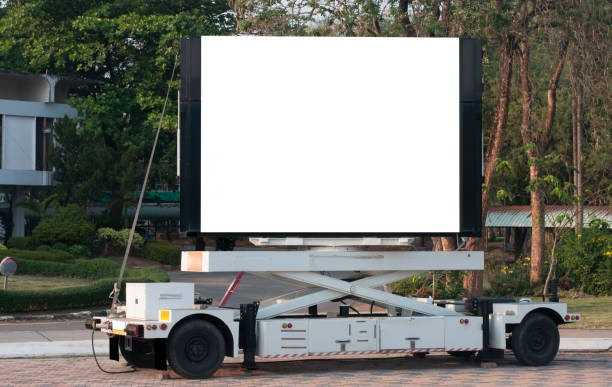
Mobile LED screens are versatile, high-impact tools for marketers. Unlike static billboards or fixed installations, mobile LED displays can traverse high-traffic areas, adapt to varying environments, and synchronize with digital campaigns. Their core advantages include:
高能见度 – Bright, dynamic visuals capture attention even in crowded urban spaces.
灵活性 – Mobile units can reach multiple locations quickly, supporting roadshows, flash events, or pop-ups.
Interactive Potential – When paired with QR codes, AR triggers, or social media prompts, mobile LED displays become engagement hubs.
Integration Capability – Real-time content updates allow seamless synchronization with online campaigns, influencer activations, and geo-targeted notifications.
These attributes position mobile LED advertising displays as not merely a display medium, but as a linchpin in integrated marketing campaigns.
Step 1: Event – Creating the Stage for Engagement
The first step in a high-impact marketing campaign is designing the event itself. This is where mobile LED screens shine, literally and figuratively.
Choosing Strategic Locations
Event locations determine both physical reach and social media shareability. For example, urban hotspots, shopping districts, and transit hubs naturally draw large crowds. Furthermore, proximity to KOLs’ or media centers enhances PR opportunities. Mobile LED units allow flexibility to test and rotate through multiple high-footfall areas within a campaign period.
Flash Activation and Pop-Ups
Flash events generate urgency and excitement. A mobile LED screen displaying animated product visuals or countdowns can transform a temporary space into a visually stimulating environment. Coupled with brand ambassadors or interactive installations, these activations encourage spontaneous participation, photos, and shares.
Integrating with Live Experiences
Event design should consider both the live audience and the virtual reach. Streaming live from the LED screen activation to social media platforms allows remote audiences to experience the launch in real time. This approach amplifies the event’s impact beyond physical attendees.
Step 2: Content – Crafting Messages That Resonate
Event visibility alone is insufficient without compelling content. Content strategy for mobile LED advertising displays must account for both digital amplification and real-world context.
Dynamic Visuals
LED displays support rich media: high-resolution videos, animations, interactive sequences, and user-generated content. By tailoring visuals to each location, marketers can maintain freshness and relevance, encouraging repeated engagement.
Social Media Synchronization
Integrating LED content with social media campaigns ensures consistent messaging. Live social feeds, hashtags, or gamified challenges displayed on the screen encourage attendees to participate digitally, bridging the physical and online experiences.
Personalization and Geo-Targeting
With LBS-enabled notifications, content can adapt to nearby audiences. Mobile LED screens can display promotions, QR codes, or AR triggers specific to each location. This level of personalization increases conversion likelihood and enhances the perception of the brand as attentive and technologically forward.

Step 3: Interaction – Driving Engagement Beyond Visuals
Interactivity transforms passive viewers into active participants. Mobile LED advertising displays provide multiple avenues for engagement:
Photo and Video Sharing – Attendees take pictures or short videos featuring the LED screen content, which they share on social media, organically extending campaign reach.
KOL and Influencer Engagement – Partnering with local influencers to feature the activation encourages their followers to attend, participate, and share content.
Gamification and AR Integration – Mobile LED screens can host interactive games, scavenger hunts, or AR experiences, linking physical engagement with digital rewards.
Real-Time Feedback and Polling – Polls displayed on the screen allow instant audience input, creating a sense of co-creation and community involvement.
Through these interaction mechanisms, mobile LED advertising displays evolve from simple signage into active engagement platforms that support both offline and online amplification.
Step 4: Conversion – Translating Buzz Into Results
Ultimately, the success of any campaign is measured by its ability to convert engagement into tangible outcomes: purchases, leads, subscriptions, or brand awareness.
Measuring Digital Conversions
By linking QR codes, promo codes, or AR triggers displayed on the LED screen to tracking platforms, marketers can directly attribute traffic and leads to specific activation points. Integration with CRM and analytics platforms ensures that data collected during the event informs future campaigns.
Optimizing Physical Conversions
Mobile LED activations can also drive in-store traffic. By directing attendees to nearby stores or pop-ups, marketers create a seamless path from online engagement to offline action. Dynamic content updates in real time enable the promotion of limited-time offers, enhancing urgency and conversion probability.
Feedback Loops for Continuous Improvement
Data collected during each event—social shares, scan rates, footfall—feeds into subsequent activations. Adjusting location, content, or interactivity in real time ensures optimization across the entire campaign lifecycle.
Case Study: A Successful Product Launch
Consider a recent campaign where a new tech product was launched using mobile LED advertising displays. The team employed the Event → Content → Interaction → Conversion framework:
Event: Mobile LED trucks visited high-traffic urban districts, creating flash activations timed with social media live broadcasts.
Content: Each display featured animated product demos, social feeds, and geo-targeted offers.
Interaction: Influencers were invited to co-host experiences, and attendees were encouraged to participate in AR challenges via mobile apps.
Conversion: QR codes linked directly to product landing pages, and LBS notifications guided nearby consumers to retail outlets.
The results were measurable: significant social media buzz, high engagement rates, and a marked increase in pre-orders and foot traffic. The integration of mobile LED displays with digital and physical touchpoints exemplifies how event marketing evolves in a modern omnichannel landscape.

Best Practices for Mobile LED Marketing Campaigns
From the campaign analysis, several principles emerge for marketers:
Design for Flexibility: Mobile LED units allow rapid adaptation to multiple locations and audience types.
Integrate Across Channels: Synchronize content across social media, apps, and live events for unified messaging.
Prioritize Interactivity: Gamification, AR, and influencer engagement extend the impact beyond passive viewing.
Use Data for Optimization: Real-time analytics inform ongoing adjustments and future campaigns.
Focus on Conversion: Plan clear pathways from engagement to tangible outcomes, such as store visits or online purchases.
By adhering to these principles, brands can maximize the ROI of mobile LED advertising displays while creating memorable experiences for their audiences.
Conclusion: Turning Showcases into Buzz
Mobile LED advertising displays are no longer just a novelty—they are central to modern integrated marketing strategies. By combining high-impact visuals with interactive content, social media integration, and geolocation targeting, brands can create campaigns that move beyond static showcases to generate real-world buzz.
这 Event → Content → Interaction → Conversion framework offers a replicable blueprint for marketers aiming to harness the full potential of mobile LED displays. With careful planning, engineering of logistics, and strategic content design, mobile LED campaigns can produce measurable engagement, amplify brand presence, and drive tangible results.
For companies investing in LED display solutions, embracing this integrated approach ensures that equipment becomes more than a screen—it becomes a dynamic engine for marketing success.