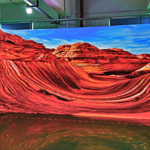
Tegnologie en argitektuur het dekades lank gesukkel om naatloos te meng. Groot uitstallings is gesien as opdringerige, lywige swart bokse. Hierdie skerms het die skoon lyne van goed ontwerpte kamers ontwrig. Argitekte het dikwels maniere gesoek om hulle weg te steek of te raam.
Hulle doel was om botsing met die gebou se estetika te vermy.
Ons betree egter 'n era waar tegnologie nie meer vereis om weggesteek te word nie; in plaas daarvan probeer dit saamsmelt. Die ontstaan van ultraligte binnenshuise LED-skerms het die paradigma verskuif. Hierdie stelsels dien as 'n "Tweede vel" vir die muur - so dun en lig dat hulle soos 'n hoë-afwerking aan die argitektoniese tekstuur voldoen. Wanneer dit afgeskakel is, is hulle neutrale, mat en waardige oppervlaktes. Wanneer dit aangeskakel word, verander hulle in diep, dinamiese vensters wat die atmosfeer herdefinieer. Hierdie artikel ondersoek die harmonie tussen tegnologie en estetika, waar die vertoning nie meer 'n toestel is nie, maar 'n dinamies definieerbare boumateriaal.
1. Die estetiese versoening: van "vreemde voorwerp" tot "inheemse oppervlak."
Die uiteindelike ideaal in ruimtelike ontwerp is die naatlose samesmelting van vorm en funksie. Tradisionele skerms het 'n "visuele skeuring" geskep - 'n blink, reflektiewe leemte wat losgemaak voel het van die omliggende klip, hout of pleister.
Die "Matte Afwerking" Neutraliteit
Moderne ultraligte binnenshuise LED-skerms fokus op die "Off-State." Hulle het nie-reflektiewe bedekkings en neutraal-gekleurde maskers. Hierdie materiale verseker dat die skerm lyk soos premium argitektuur wanneer dit dormant is. Hierdie ontwerpbenadering verhoog beide funksionaliteit en estetiese waarde.
Stille elegansie: Wanneer die krag af is, behou die muur sy argitektoniese integriteit. Dit skree nie om aandag nie. Dit sit in "Stil modus", en dien as 'n gesofistikeerde, mat-afwerking muurbehandeling wat die kamer se beligting komplementeer.
Die tweede velkonsep: Omdat die modules ultra-dun is (dikwels gemeet in millimeter eerder as sentimeter), benodig hulle nie diep inspringing of swaar strukturele rame nie. Hulle sit gelyk teen die substraat, en word nie onderskei van die muur se eie "vel".
Instant Soul: Die "On-State" Transformasie
Die magie gebeur tydens die oorgang. Met 'n enkele opdrag los die neutrale muur op in 'n hoëdefinisie-uitsig. Dit laat 'n ruimte toe om te wissel tussen "Serenity" ('n stil voorportaal) en "Power" ('n meeslepende handelsmerk-ervaring) sonder om 'n enkele meubelstuk te verskuif.
2. Ingenieur die onsigbare: die wetenskap van die ultraligte-module
Om die status van 'n "tweede vel" te bereik, moet die hardeware 'n radikale vermindering in gewig en dikte ondergaan sonder om prestasie in te boet.
Materiaalwetenskap: Koolstofvesel en Magnesiumlegerings
Standaard LED-kaste is swaar en hitte-intensief. Ultraligte binnenshuise LED-skerms gebruik gevorderde materiale om gewig af te skud.
Strukturele ligheid: Deur hoësterkte magnesiumlegerings of koolstofveselrame te gebruik, word die gewig van die skerm met tot 50% verminder in vergelyking met tradisionele modelle. Dit laat toe dat die "vel" op standaard gips gemonteer word of selfs van delikate plafonstrukture opgehang word.
Hittebestuur: Maerheid nooi gewoonlik hitteprobleme uit. Deur die gebruik van hoë-doeltreffende gemeenskaplike katode-aandrywingtegnologie en termiese geleidende agterplate, verdryf hierdie skerms egter hitte passief. Dit skakel die behoefte aan harde, lywige waaiers uit, wat verseker dat die "vel" so stil soos 'n regte muur is.
Modulêre presisie
Die "naatlose" aard van die vel word moontlik gemaak deur hoë-presisie modulariteit. Elke teël is ontwerp om met sub-millimeter akkuraatheid te pas, om te verseker dat wanneer hulle oor 'n muur "groei", geen nate of gapings die argitektoniese vloei onderbreek nie.
3. Die argitektoniese narratief: Definieer ruimte deur lig
Wanneer die uitstalling 'n boumateriaal word, verander die manier waarop ons ruimtes ontwerp. Ons word nie meer beperk deur vaste versierings nie; ons werk met "Dynamiese oppervlaktes."
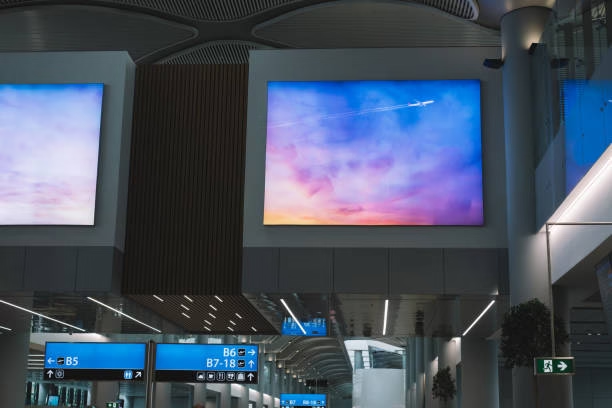
Die virtuele venster: In binneruimtes met geen toegang tot natuurlike lig nie, kan die ultraligte LED-vel 'n venster na 'n woud, 'n stad of 'n lug naboots. Omdat dit gelyk met die muur sit, is die illusie van diepte baie meer oortuigend as 'n gemonteerde TV.
Digitale fresco's: Histories was groot sale versier met fresko's wat 'n permanente storie vertel het. 'n Tweede LED-vel maak voorsiening vir "Lewende Fresco's" - kuns wat verander met die tyd van die dag, die seisoen of die gebeurtenis wat in die kamer plaasvind.
Responsiewe omgewings: In korporatiewe of gasvryheidsinstellings kan die vel reageer op die teenwoordigheid van mense. Soos 'n gas in 'n gang afstap, kan die "vel" subtiel verlig of sagte, leidende patrone vertoon, wat 'n dialoog tussen die persoon en die gebou skep.
4. Installasie en Integrasie: Die Ontwerper se Vryheid
Een van die grootste struikelblokke vir argitekte was die "tegniese skuld" van LED - die komplekse bedrading, swaar hakies en verkoelingsvereistes. Ultraligte tegnologie verwyder hierdie hindernisse.
Direkte muurbevestiging: Hierdie uitstallings gebruik dikwels magneet-gebaseerde of skraal-beugel monteerstelsels wat voorsiening maak vir die front-diensbare installasie direk op bestaande mure.
Minimale diepte: Met 'n totale dikte insluitend die monteerstruktuur dikwels onder 50 mm, die vertoning steel nie waardevolle vloerspasie nie. Dit respekteer die "Plan View" van die argitek se oorspronklike tekening.
Kabelbestuur: Integrated “Internal Data & Power” paths mean there are no messy external wires. The power supply units (PSUs) can often be housed remotely, keeping the wall thin and the heat away from the sensitive liquid crystal layers.

5. Volhoubaarheid en die "eindelose lewe" van 'n ruimte
'n Kamer met 'n geïntegreerde LED-vel is 'n vertrek wat nooit verouderd raak nie.
Volhoubare versiering: In plaas daarvan om plakpapier af te breek of mure oor te verf om 'n handelsmerk se voorkoms op te dateer, werk die eienaar eenvoudig die digitale lêer op. Dit verminder konstruksie-afval en die koolstofvoetspoor wat met fisiese opknappings verband hou.
Energie-intelligensie: Gevorderd ultraligte binnenshuise LED-skerms beskik oor slim omgewingsligsensors. Hulle pas hul helderheid aan om by die kamer se beligting te pas, om te verseker dat hulle die minimum hoeveelheid energie verbruik wat nodig is om lewendig te bly.
6. Gevolgtrekking: Die Ontwaking van Stilte
Die toekoms van argitektuur is nie meer tegnologie nie; dit is slimmer tegnologie. Deur in 'n "Tweede vel" te ontwikkel, het die LED-skerm uiteindelik sy plek in die ontwerper se gereedskapstel gevind. Dit is nie meer 'n indringer nie; dit is 'n inwoner.
Die ultraligte binnenshuise LED-skerm bied die uiteindelike luukse: die vermoë om te kies tussen stilte en skouspel. Dit eer die stilte van die argitektuur wanneer die siel rus nodig het, en dit steek die (stygende) energie van die ruimte aan wanneer die siel inspirasie nodig het. Wanneer tegnologie so dun en natuurlik soos 'n laag vel word, begin die gebou self asemhaal, praat en leef.