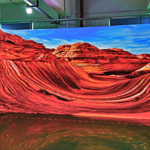
Rental stage LED displays exist in a demanding environment where efficiency, reliability, and visual accuracy all matter. Event teams assemble and dismantle these screens repeatedly, often under tight schedules and changing venue conditions. Because of these demands, operators sometimes question whether rental LED panels can maintain a seamless appearance after countless installations. However, modern engineering allows these systems to deliver consistent alignment, stable structure, and long-term reliability even in high-frequency rental cycles. Understanding how these panels maintain performance helps rental companies, stage designers, and event producers make informed decisions about equipment investment and use.
Structural Engineering Built for Repeated Stress
Rental stage LED displays must endure constant handling, stacking, transportation, and reassembly. Therefore, manufacturers design their cabinets with strong but lightweight structures. Most frames use die-cast aluminum because it combines rigidity with low weight. This structure resists bending during transportation and installation. When the frame remains stable, panel alignment remains accurate.
Furthermore, the smoothness of a rental LED wall depends on how each cabinet holds its shape under stress. Even small deformations create visible gaps. Because of this risk, manufacturers refine cabinet geometry to distribute pressure evenly. Corners, ribs, and internal braces support the panel under repeated load. As a result, the cabinet returns to its original shape after every installation.
Additionally, structural components undergo extensive fatigue testing. These tests simulate real-world stress from touring events, outdoor festivals, and stage shows. Through controlled mechanical cycles, engineers confirm that the cabinets maintain stable geometry over years of handling. Therefore, structural integrity becomes a foundation for seamless LED alignment.
Precision Machining Supports Panel-to-Panel Accuracy
The seamless appearance of rental stage LED displays depends on precision machining. Production facilities shape cabinet frames using CNC equipment. With tight tolerances, each panel aligns with the next. These tolerances often stay within fractions of a millimeter. Because small errors become visible lines on large screens, precision machining helps maintain the seamless effect across installations.
Moreover, precision machining ensures that modules sit firmly in place. When module surfaces remain flat, they create uniform light output and clean visual transitions. This precision prevents panel misalignment even after modules experience repeated removal for repairs or color calibration. Therefore, machining accuracy directly supports long-term visual performance.
Additionally, perfect alignment depends on consistent module thickness. LED module surfaces vary slightly because of manufacturing processes. However, rental-grade modules undergo stricter control. Their surfaces stay uniform, allowing edges to meet with fewer height differences. As a result, the display maintains a smooth, seamless appearance during assembly.
Locking Systems Preserve Seamless Alignment
One of the most important engineering features of rental LED panels is the locking system. Fast locks connect cabinets quickly while preserving mechanical precision. When locks engage, they pull panels into the perfect position. They also compress cabinet edges together with consistent force. This action eliminates small gaps that appear during manual alignment.
Manufacturers design locking systems for repeated use. The locks use hardened alloys, smooth internal gears, and reinforced levers. These components reduce wear even after hundreds of rental cycles. Therefore, the locking system continues to provide predictable performance day after day.
Moreover, many rental stage LED displays use both side locks and top locks. These layered systems ensure vertical and horizontal alignment across the entire screen. Because alignment forces distribute evenly, stress on each lock decreases. This engineering technique increases locking lifespan and maintains visual smoothness.
Additionally, advanced locks offer micro-adjustment. Micro-adjustment shifts cabinets by fractions of a millimeter. Installers use these functions to fix minor height or gap issues on site. Because micro-adjustments require no tools, teams maintain seamlessness quickly even under time pressure.
Module Alignment Mechanisms Ensure Surface Flatness
The surface of a rental LED display must remain perfectly flat to deliver a seamless visual effect. However, stage environments introduce many challenges. Temperature changes, mechanical pressure, and manual handling affect module positioning. To solve these issues, designers integrate alignment pins and locating columns into the cabinet.
These alignment systems guide modules precisely into place. When pins engage, they prevent lateral movement. As a result, the display avoids uneven module edges that break the seamless surface. Additionally, these systems help installers work faster because modules slide into correct alignment automatically.
Moreover, rental modules attach using magnetic guides or quick-release mechanisms. These mounting methods allow modules to settle into a flat surface with minimal manual adjustment. Therefore, installers maintain consistent visual quality without performing complex alignment steps.
Durable Connectors Maintain Signal Stability
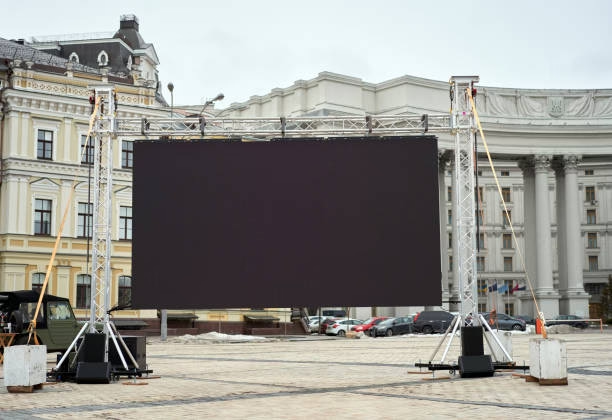
Repeated installations stress data connectors and power links. When connectors degrade, signal loss creates flickering or missing pixels. These failures break the seamless effect. Because of this risk, rental stage LED displays use reinforced connectors. Gold-plated pins resist oxidation. Rubberized housings protect against impacts and dust. Additionally, locking connectors prevent cables from pulling loose during transport.
Beyond durability, signal redundancy also protects seamless performance. Many rental systems use dual-backup data circuits. If one path fails, the backup eliminates interruptions. Because of this redundancy, the display maintains uninterrupted visuals even if connectors experience stress.
Uniform LED Calibration Preserves Visual Seamlessness
Mechanical alignment matters, but visual alignment matters equally. Rental screens move between venues with different lighting conditions. These changes affect perceived brightness and color uniformity. Therefore, advanced calibration helps maintain a seamless image.
Manufacturers calibrate modules at the factory, but rental companies often perform field recalibration. Through brightness correction, color balancing, and gamma adjustment, operators match modules across installations. Once modules match visually, the display appears seamless even when assembled from mixed batches.
Additionally, many rental stage LED displays support data memory. Each module stores calibration files internally. When modules move between cabinets, they maintain their settings automatically. This feature reduces calibration time and preserves consistent visual output.
Shock Resistance Protects Long-Term Seamlessness
Transportation creates mechanical shock. Even small impacts can offset cabinet geometry or shake internal components loose. Therefore, manufacturers design rental LED displays with shock-resistant structures. Shock pads, reinforced corners, and internal buffers reduce vibration damage.
Additionally, die-cast frames distribute impact forces evenly. When frames resist deformation, panels maintain alignment during future installations. This resistance protects both mechanical and visual seamlessness.
Consistent Cabinet Weight Improves Installation Accuracy
Weight consistency matters because it allows cabinets to hang evenly. When weight distribution stays uniform, cabinets align naturally with less manual adjustment. Therefore, engineers focus on low-variation cabinet design. Through strict quality control, production lines maintain similar weight across all panels.
Uniform weight also prevents strain on rigging structures. When the structure remains stable, the display avoids sagging, which prevents vertical gaps from forming.
Weather Protection Supports Outdoor Seamlessness
Outdoor rental screens face temperature swings, humidity, and wind loads. Thermal expansion can create small gaps between cabinets. To address these challenges, manufacturers use materials with low thermal expansion properties. Die-cast aluminum expands less than steel, maintaining alignment under heat.
Additionally, weatherproof gaskets prevent moisture from entering cabinets. Moisture can warp components or swell materials, both of which affect alignment. With proper sealing, cabinets maintain stable geometry even in outdoor environments.
Fast Maintenance Supports Long-Term Seamlessness
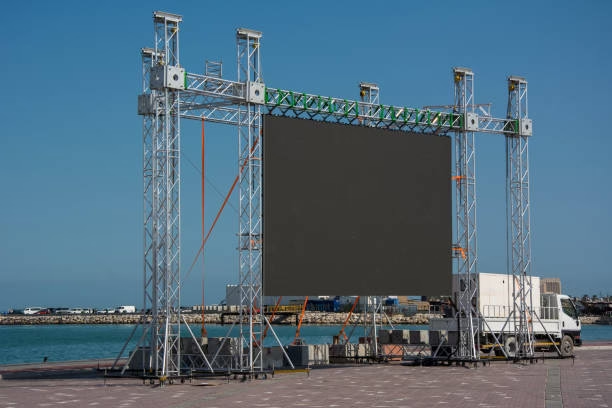
Rental LED screens must remain easy to maintain because damaged modules influence the seamless appearance. Because of this requirement, designers enable front or rear maintenance. Technicians remove modules quickly without disturbing surrounding components. When maintenance becomes faster, the display experiences less mechanical stress.
Additionally, field-replaceable parts help maintain consistency. When a module or lock wears out, technicians replace it without replacing the entire cabinet. These maintenance practices extend lifespan and protect alignment accuracy.
Training and Handling Practices Influence Seamlessness
Engineering alone cannot guarantee long-term seamlessness. Proper handling matters. Professional rental teams follow strict procedures during transport, storage, installation, and packaging. With correct handling, cabinets experience less impact and deformation.
Furthermore, proper tool usage prevents locking system damage. Teams trained in alignment techniques maintain long-term display quality. Therefore, many rental companies invest in operator training to protect their equipment.
Technological Advancements Enhance Seamless Performance
The rental LED industry continues refining mechanical and visual technology. Innovations such as carbon-hybrid frames, magnetic alignment rails, smart calibration chips, and adaptive locks improve long-term seamlessness.
Moreover, mechanical tolerances shrink with each generation. As precision improves, panels deliver more accurate alignment across years of use. Therefore, rental stage LED displays continue to evolve, making seamless performance more durable than ever.
Konklusyon
Rental stage LED displays withstand intense operational cycles. Through strong cabinet engineering, precision machining, durable locking systems, stable alignment mechanisms, and advanced visual calibration, these screens maintain seamless performance after repeated installations. Their design allows them to absorb stress, resist damage, and deliver consistent visual quality across demanding environments.
Because of these engineering principles, rental LED screens remain one of the most reliable visual tools in live event production. With proper handling and ongoing technological advancement, they continue to support high-impact stage designs with stable, seamless performance year after year.