Durante décadas, a tecnologia e a arquitetura lutaram para se misturar perfeitamente. Grandes displays eram vistos como caixas pretas intrusivas e volumosas. Essas telas perturbaram as linhas simples de salas bem projetadas. Os arquitetos muitas vezes procuravam maneiras de ocultá-los ou enquadrá-los.
O objetivo era evitar conflitos com a estética do edifício.
No entanto, estamos a entrar numa era em que a tecnologia já não exige ser escondida; em vez disso, procura fundir-se. O surgimento de displays LED internos ultraleves mudou o paradigma. Esses sistemas atuam como uma “segunda pele” para a parede – tão finos e leves que aderem à textura arquitetônica como um acabamento de alta qualidade. Quando desligados, eles são superfícies neutras, foscas e dignas. Quando ligados, transformam-se em janelas profundas e dinâmicas que redefinem a atmosfera. Este artigo explora a harmonia entre tecnologia e estética, onde o display não é mais um eletrodoméstico, mas um material de construção dinamicamente definível.
1. A reconciliação estética: do “objeto estranho” à “superfície nativa”.
O ideal final em design espacial é a fusão perfeita de forma e função. As telas tradicionais criaram uma “fenda visual” – um vazio brilhante e reflexivo que parecia separado da pedra, madeira ou gesso circundante.
A neutralidade do “acabamento fosco”
Os modernos displays LED ultraleves para interiores concentram-se no “estado desligado”. Eles apresentam revestimentos anti-reflexos e máscaras em tons neutros. Esses materiais garantem que a tela se assemelhe à arquitetura premium quando inativa. Esta abordagem de design aumenta a funcionalidade e o valor estético.
Elegância silenciosa: Quando a energia é desligada, a parede mantém sua integridade arquitetônica. Não grita por atenção. Ele fica no “Modo Silencioso”, atuando como um tratamento de parede sofisticado com acabamento fosco que complementa a iluminação da sala.
O conceito da segunda pele: Como os módulos são ultrafinos (geralmente medidos em milímetros em vez de centímetros), eles não necessitam de recessos profundos ou estruturas estruturais pesadas. Eles ficam rentes ao substrato, tornando-se indistinguíveis da própria “pele” da parede.
Alma Instantânea: A Transformação “No Estado”
A mágica acontece durante a transição. Com um único comando, a parede neutra se dissolve em uma vista de alta definição. Isso permite que um espaço alterne entre “Serenity” (um lobby tranquilo) e “Power” (uma experiência de marca imersiva) sem mover uma única peça de mobiliário.
2. Projetando o Invisível: A Ciência do Módulo Ultraleve
Para atingir o status de “segunda pele”, o hardware deve passar por uma redução radical de peso e espessura sem sacrificar o desempenho.
Ciência dos Materiais: Fibra de Carbono e Ligas de Magnésio
Os gabinetes de LED padrão são pesados e consomem muito calor. Telões LED ultraleves para ambientes internos utilize materiais avançados para perder peso.
Leveza Estrutural: Ao utilizar ligas de magnésio de alta resistência ou molduras de fibra de carbono, o peso do display é reduzido em até 50% em comparação com os modelos tradicionais. Isso permite que a “pele” seja montada em drywall padrão ou até mesmo suspensa em delicadas estruturas de teto.
Gerenciamento de calor: A magreza geralmente provoca problemas de calor. No entanto, ao usar tecnologia de acionamento de cátodo comum de alta eficiência e backplanes termicamente condutores, esses monitores dissipam o calor passivamente. Isso elimina a necessidade de ventiladores barulhentos e volumosos, garantindo que a “pele” seja tão silenciosa quanto uma parede real.
Precisão Modular
A natureza “perfeita” da pele é possível graças à modularidade de alta precisão. Cada ladrilho é projetado para se ajustar com precisão submilimétrica, garantindo que quando eles “crescerem” em uma parede, nenhuma costura ou lacuna interrompa o fluxo arquitetônico.
3. A narrativa arquitetônica: definindo o espaço através da luz
Quando o display se torna um material de construção, a forma como projetamos os espaços muda. Não estamos mais limitados por decorações fixas; estamos trabalhando com “Superfícies Dinâmicas”.
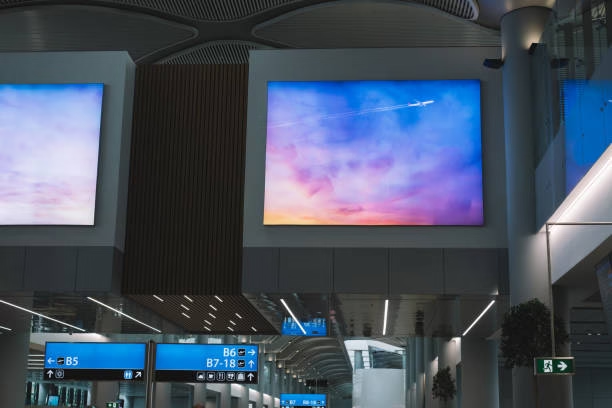
A janela virtual: Em espaços interiores sem acesso à luz natural, a pele ultraleve de LED pode simular uma janela para uma floresta, uma cidade ou um céu. Por ficar nivelado com a parede, a ilusão de profundidade é muito mais convincente do que uma TV montada.
Afrescos Digitais: Historicamente, os grandes salões eram decorados com afrescos que contavam uma história permanente. Uma segunda pele de LED permite “Afrescos Vivos” – arte que muda com a hora do dia, a estação ou o evento que ocorre na sala.
Ambientes Responsivos: Em ambientes corporativos ou de hospitalidade, a pele pode reagir à presença de pessoas. À medida que um hóspede caminha por um corredor, a “pele” pode iluminar sutilmente ou exibir padrões suaves e orientadores, criando um diálogo entre a pessoa e o edifício.
4. Instalação e Integração: A Liberdade do Designer
Um dos maiores obstáculos para os arquitetos foi a “dívida técnica” do LED – a fiação complexa, os suportes pesados e os requisitos de refrigeração. A tecnologia ultraleve remove essas barreiras.
Montagem direta na parede: Esses monitores geralmente usam sistemas de montagem com suporte magnético ou com suporte fino que permitem a instalação com manutenção frontal diretamente nas paredes existentes.
Profundidade Mínima: Com uma espessura total incluindo a estrutura de montagem muitas vezes abaixo 50mm, a tela não ocupa espaço valioso. Respeita a “Plan View” do desenho original do arquiteto.
Gerenciamento de cabos: Integrated “Internal Data & Power” paths mean there are no messy external wires. The power supply units (PSUs) can often be housed remotely, keeping the wall thin and the heat away from the sensitive liquid crystal layers.

5. Sustentabilidade e a “vida infinita” de um espaço
Uma sala com revestimento LED integrado é uma sala que nunca se torna obsoleta.
Decoração Sustentável: Em vez de derrubar papel de parede ou repintar paredes para atualizar a aparência de uma marca, o proprietário simplesmente atualiza o arquivo digital. Isto reduz os resíduos de construção e a pegada de carbono associada às renovações físicas.
Inteligência Energética: Avançado displays LED internos ultraleves apresentam sensores inteligentes de luz ambiente. Eles ajustam o brilho para corresponder à iluminação da sala, garantindo que consomem a quantidade mínima de energia necessária para permanecerem vívidos.
6. Conclusão: O Despertar da Quietude
O futuro da arquitetura não é mais tecnologia; isso é mais inteligente tecnologia. Ao evoluir para uma “segunda pele”, o display LED finalmente encontrou seu lugar no kit de ferramentas do designer. Não é mais um intruso; é um habitante.
O display LED interno ultraleve oferece o luxo máximo: a capacidade de escolher entre o silêncio e o espetáculo. Ele honra a quietude da arquitetura quando a alma precisa de descanso e acende a energia (crescente) do espaço quando a alma precisa de inspiração. Quando a tecnologia se torna tão fina e natural como uma camada de pele, o próprio edifício começa a respirar, a falar e a viver.