As outdoor advertising continues to embrace flexibility and creativity, outdoor flexible LED displays have become indispensable tools for visual marketing. Their ability to bend, wrap, and integrate with diverse architectural surfaces has opened up new possibilities for design and engagement. However, as these displays are often exposed to harsh sunlight and ultraviolet (UV) radiation for years, one key question arises—will their materials eventually become brittle under long-term UV exposure?
This question is not only technical but also essential for every brand and installer aiming to ensure the longevity and reliability of LED display investments. Understanding the science of UV degradation, the composition of display materials, and the role of advanced coatings and polymers provides valuable insight into how modern flexible LED screens achieve long-term stability in outdoor conditions.
1. The Nature of UV Exposure in Outdoor Environments
Outdoor LED screens operate under continuous exposure to UV rays, which are one of the most damaging environmental elements for polymer-based materials. UV radiation carries enough energy to break down molecular bonds in plastics and resins, leading to discoloration, surface cracking, or reduced elasticity.
For traditional plastic components, this degradation manifests as brittleness—an irreversible condition where flexibility and structural integrity are lost. For outdoor flexible LED display panels, such damage would compromise both performance and appearance.

2. Composition of Flexible LED Display Materials
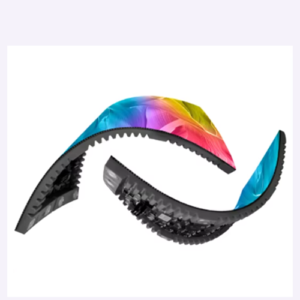
Flexible LED displays differ significantly from conventional rigid LED panels in both structure and material composition. While rigid modules often use aluminum and tempered glass, flexible versions rely on soft substrates such as thermoplastic polyurethane (TPU), silicone rubber, or flexible PCB layers.
Each of these materials has distinct resistance properties:
TPU (Thermoplastic Polyurethane): Known for elasticity and UV stability, ideal for bending without cracking.
Silicone Rubber: 具有高耐热性和耐候性,在热和紫外线下保持柔软度。
柔性 PCB 底座: 采用聚酰亚胺薄膜加固,即使在物理应力下也能确保电子稳定性。
这些材料结合起来形成复合结构,不仅能够承受机械弯曲,还能承受长时间的紫外线辐射暴露。
3. 紫外线辐射如何影响显示材料
紫外线辐射主要通过引发光化学反应来影响聚合物链。当被材料表面吸收时,它会导致分子断裂,从而破坏赋予聚合物柔韧性的键。随着时间的推移,这会导致表面粗糙度增加、褪色和微裂纹。
然而,降解程度取决于多种环境因素:
地理位置: 赤道附近或高海拔地区的紫外线强度更强。
安装角度: 垂直安装所受到的紫外线压力可能比水平安装的要小。
表面涂层: 抗紫外线处理和表面薄膜起着至关重要的保护作用。
现代的 柔性LED显示材料 通过整合紫外线稳定剂和反光颜料来抵消这种降解,显着降低分子分解率。
4、抗紫外线工程及防护涂料
为保证长期的户外性能, 制造商将专门的抗紫外线涂料和添加剂应用于每个关键部件。这些包括:
紫外线吸收剂: 吸收有害紫外线波长并将其作为无害热量消散的化合物。
受阻胺光稳定剂 (HALS): Chemical additives that neutralize free radicals formed during UV exposure.
Protective Surface Films: Transparent layers that physically block a portion of the UV spectrum while preserving optical clarity.
Through these innovations, outdoor flexible LED displays can maintain elasticity and color vibrancy even after years of exposure. Advanced silicone encapsulation further enhances optical efficiency and shields LEDs from oxidation.

5. Mechanical Durability and Flexibility Retention
Flexibility is a defining characteristic of these displays, and it directly depends on the material’s ability to resist embrittlement. Manufacturers perform long-term aging tests that simulate continuous UV exposure, humidity, and temperature cycles to evaluate performance.
结果表明,高质量的硅基模块在数千小时的运行后仍保留 90% 以上的原始灵活性。这种耐用性确保即使在长期户外安装后,面板仍可弯曲、安全且视觉一致。
此外,模块化设计 户外LED柔性屏 无需拆除整个系统即可更换单个面板,从而降低维护成本并延长使用寿命。
6. 紫外线照射以外的环境影响
虽然紫外线辐射起着重要作用,但其他环境条件也会影响材料的完整性。如果不适当缓解,温度波动、空气污染和潮湿等因素可能会加速老化。
High-temperature UV exposure may increase the chemical reactivity of polymer surfaces, while humidity introduces potential for micro-corrosion in internal circuits. To counter this, flexible LED systems employ sealed designs, IP65+ waterproof ratings, and corrosion-resistant hardware.
Thus, UV resistance is only part of a comprehensive environmental protection strategy that ensures consistent performance under real-world outdoor conditions.
7. Advances in Material Science for Outdoor Durability
The development of outdoor flexible LED displays reflects broader advances in polymer chemistry and nanotechnology. Modern materials incorporate nano-fillers, reflective micro-coatings, and self-healing polymers that automatically restore minor UV damage.
In addition, thermal management technologies, including heat-dissipating composites, prevent overheating—a common catalyst for accelerated UV degradation. Together, these innovations contribute to the exceptional longevity and structural integrity of flexible LED panels in the field.

8. Real-World Applications and Performance Validation
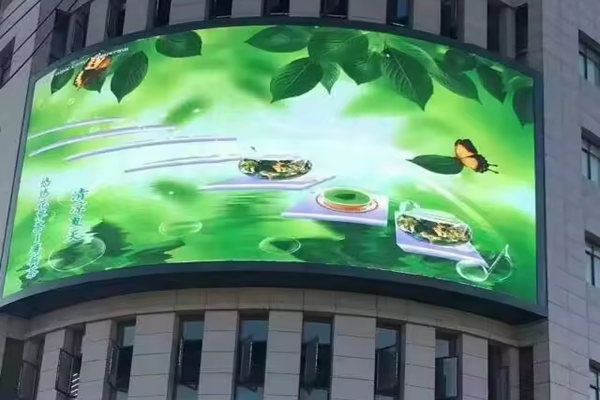
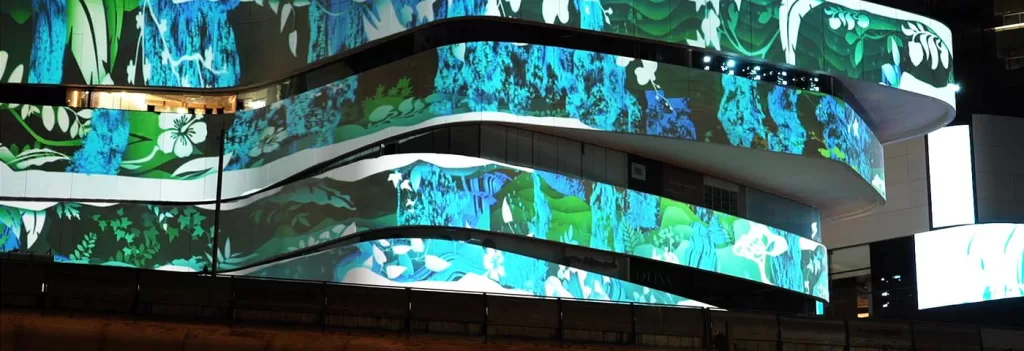
Major advertising firms and event organizers have adopted flexible LED technology in open-air applications, such as curved building facades, outdoor stages, and creative installations. Long-term case studies show minimal color fading and structural wear even after continuous use in high-sunlight regions.
这些发现证实,正确设计的材料与防紫外线涂层相结合,可以承受具有挑战性的气候,而不会显着损失灵活性或亮度。
9. 维护和长期可靠性策略
为了进一步防止紫外线引起的劣化,操作员必须定期进行清洁和检查。去除灰尘和污染物可防止表面侵蚀并确保最佳散热。一些供应商提供紫外线刷新涂层,可以定期重新涂抹以保持保护。
常规目视检查和固件调整也有助于在多年的运行中保持统一的颜色校准。从本质上讲,虽然材料科学提供了基础,但持续的维护可确保使用寿命。
结论:阳光下持久的灵活性
综上所述, outdoor flexible LED display materials do not easily become brittle under long-term UV exposure—provided they are manufactured with advanced polymers, UV stabilizers, and protective coatings. Through continuous innovation in material science and environmental design, these displays achieve remarkable resilience, balancing flexibility, durability, and visual brilliance.
For modern outdoor advertising, this means creative freedom without compromise. Flexible LED screens can confidently illuminate public spaces under intense sunlight, proving that technology and design can coexist with nature’s harshest elements.