LED 视频墙安装:壁挂式、悬挂式、落地式 – 结构工程指南

When planning a commercial LED display project, selecting the correct pixel pitch and brightness level represents only the beginning of the engineering process. However, the most critical stage often lies in the physical installation structure, where safety, durability, and long-term performance directly depend on precise structural design.

Unlike lightweight consumer displays, industrial LED video walls consist of heavy die-cast aluminum cabinets, integrated power supply systems, and high-density copper busbars. Therefore, engineers must carefully evaluate load distribution, mounting strength, and environmental conditions before installation begins. Even a minor structural miscalculation can create serious risks for both the display system and the surrounding building infrastructure.

Moreover, improper mounting configurations or failure to account for wind loads, vibration, thermal expansion, and structural stress can lead to catastrophic consequences. These issues may include panel deformation, installation instability, building code violations, and even complete structural failure. As a result, professional installation planning becomes just as important as display performance itself.

For project managers, architectural engineers, and property owners, understanding the physics behind a secure LED显示屏安装 is a mandatory safety requirement. This guide provides a comprehensive structural engineering framework contrasting the three primary deployment methods: Wall-Mounted, Hanging, 和 Floor-Standing

1. The Installation Method Comparison Matrix

Selecting the right mounting architecture requires balancing space availability, wall integrity, maintenance access, and your capital allocation budget. The matrix below breaks down these variables across the three primary configuration types:

Engineering ParameterWall-Mounted LED DisplayHanging LED ScreenFloor-Standing / Totem Mount
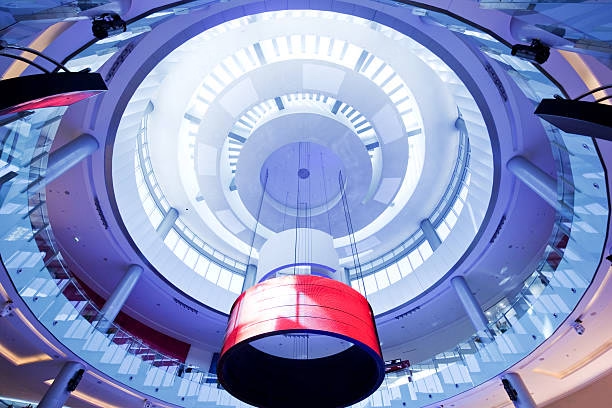
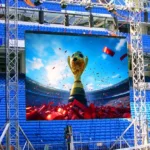
Primary EnvironmentsCorporate conference rooms, retail stores, and luxury broadcast studiosConcert stages, exhibition halls, high-ceiling transit hubsShopping mall atriums, public plazas, and outdoor billboards
Load-Bearing TargetTransferred horizontally into structural walls (Concrete/Steel studs)Transferred vertically into roof trusses, I-beams, or ceiling gridsTransferred directly downward into solid floor slabs or concrete foundations
Maintenance ProfileFront Service Mandate (Modules removed via suction/magnetic tools)Rear service preferred (Requires technician catwalk or scissor lift)Flexible (Rear maintenance corridors or front hydraulic slide-outs)
Structural ComplexityLow-to-medium (Relies on a true, level unistrut back-frame matrix)High (Requires certified rigging steel, wire ropes, and shackles)Medium-to-high (Requires ballast weight calculations or foundation anchor bolts)
Cost Grade IndexEconomical / BaselinePremium (High labor and specialized rigging hardware costs)Intermediate to High (Dependent on custom steel framing fabrication)

2. Deep-Dive: Engineering Blueprints & Design Points

Each installation path demands compliance with specific mechanical limits to protect both the display hardware and the public gathering spaces below them.

   Wall-Mounted Layout:              Hanging Rigging Layout:           Floor-Standing Foundation:
    ▒▒▒ [Solid Concrete Wall]            =====================            ┌───────────────────────┐
    ▒▒▒      │  (Anchor Bolts)           ║  [Main Roof Truss]             │  [LED Screen Facade]  │
    ▒▒▒      ▼                           ║        │ (Rigging Flybar)      └───────────┬───────────┘
    ▓▓▓ [Unistrut Backframe]             ▼        ▼                                   │ (Steel Column)
    ███ [Front-Service LED]            [Hanging LED Array]                            ▼
                                                                          ⚓ [J-Bolt Concrete Base]

2.1. Method A: Wall-Mounted LED Display

  • The Structural Mandate: Never anchor a commercial LED wall directly into standard drywall or unreinforced plasterboard surfaces. The wall must consist of solid poured concrete, dense cinder blocks, or a load-tested structural steel stud network.

  • The Unistrut Matrix: Installers must construct a secondary grid using heavy-duty unistrut channels. This steel framing serves two vital functions: it distributes the screen’s dead weight evenly across the wall surface, and it allows technicians to shim out minor wall warping, ensuring a flat plane. Any slight twist in the back frame will compress the LED cabinets, creating visible seams or cracking the delicate SMD (Surface Mounted Diode) pixels at the panel edges.

2.2. Method B: Hanging LED Screen

  • The Rigging Safety Factor: Suspended displays hang directly over public spaces, making safety calculations critical. Structural engineers enforce a strict safety factor ceiling:

$$\text{Structural Safety Factor } (\beta) \ge 3.0 \text{ to } 5.0$$
  • This means every overhead flybar, wire rope shackle, turnbuckle, and roof attachment point must be rated to support 3 to 5 times the actual dead weight of the suspended LED display.

  • Truss Load Verification: Before lifting the array, engineers must verify that the building’s roof trusses can handle the concentrated point loads. In high-density rental configurations, the total weight can easily exceed 2,000 kg, requiring precise hoist distribution to prevent ceiling deflection.

2.3. Method C: Floor-Standing / Pillar-Mounted Systems

  • The Overturning Moment Deflection: Floor-standing displays move the load path away from the walls and ceiling, directing it straight down into the floor slab. The main engineering challenge here is overcoming the overturning moment caused by a front-heavy center of gravity or high wind loads.

  • Ballast and Foundation Engineering: For indoor atrium displays, the supporting steel frame must feature an extended rear leg system weighted down with certified concrete or steel ballast blocks. For outdoor columns, engineers must pour a deep concrete footing embedded with high-tensile J-bolts. This anchor configuration is designed to counteract lateral forces and ensure the display remains perfectly vertical over decades of service.

柔性不规则LED显示屏

3. The Safety Calculation Framework: Managing Environmental Stress

To secure building permit approvals, every customized LED显示屏安装 blueprint must pass a rigorous, multi-point load check:

$$\mathbf{F_{\text{total}} = F_{\text{Dead Load}} + F_{\text{Wind Load}} + F_{\text{Seismic Load}}}$$
                           [Environmental Force Inputs]
                                        │
         ┌──────────────────────────────┼──────────────────────────────┐
         ▼                              ▼                              ▼
  [Dead Load Check]              [Wind Load Calculation]        [Seismic Engineering]
  Calculates cumulative weight   Measures air pressure forces   Maintains structural integrity
  of cabinets, frames, cables.   on outdoor screen faces.       during tectonic shifts.
  1. Dead Load Calculations: This represents the static, cumulative weight of the entire display assembly, including the die-cast cabinets, internal power modules, receiving cards, wiring looms, and secondary structural steel framing pieces.

  2. Wind Load Calculations (Critical for Outdoor Billboards): An outdoor LED wall acts like a massive sail. Wind hitting the solid screen face creates immense lateral pressure. Engineers apply regional wind speed data to calculate the required thickness of the structural steel pillars and the depth of the concrete foundation, ensuring the system can withstand hurricane-force winds.

  3. Seismic Engineering (Earthquake Stabilization): In active fault zones, display frames must incorporate flexible, energy-dissipating mechanical joints. These joints allow the primary structural steel skeleton to flex slightly during a tectonic shift without transferring stress directly into the fragile silicon LED modules, preventing glass shattering or electrical connection breaks.

4. Operational Access: Front Service vs. Rear Service Evolution

Your choice of installation method dictates your long-term maintenance access path. Choosing an incorrect configuration can significantly increase your operational downtime.

  • The Front-Service Protocol: For tight wall-mounted installations where the screen sits flush against a surface, you must use a front service LED cabinet. In this setup, individual LED modules are held in place by precision magnetic latches or front-facing locking screws. If a single pixel cluster fails, a technician can use a pneumatic suction cup tool to safely remove and replace the damaged module from the front of the display in under 60 seconds, without disturbing the surrounding screen architecture.

  • The Rear-Service Protocol: For large floor-standing arrays or overhead hanging rigs, rear-service designs remain highly efficient. Technicians access power boxes, ribbon cables, and receiving cards via hinged doors on the back of the cabinets. This allows maintenance teams to swap out internal components during live events without blocking the audience’s view from the front.

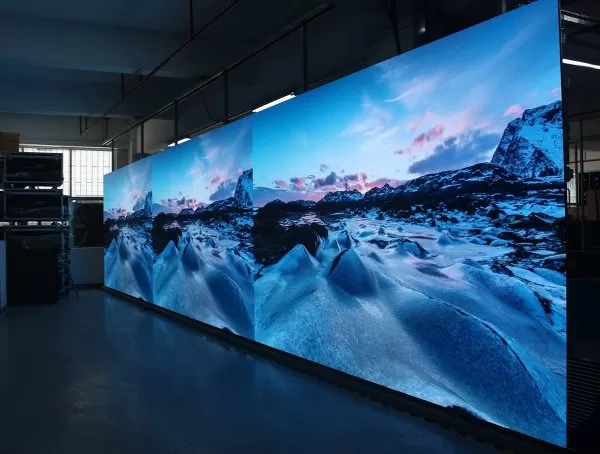
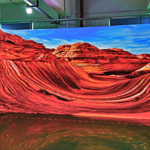
wall mounted LED video wall installation

Conclusion: Engineered for Absolute Structural Security

In high-end LED integration, structural safety ensures long-term operational stability. Large-scale LED displays require professional engineering solutions. They cannot use standard television installation methods.

First, analyze the building’s structural integrity carefully. Next, calculate the exact dead loads before installation begins. Then, select mounting systems based on maintenance access needs.

As a result, the display remains secure and visually impressive. Moreover, proper engineering reduces long-term operational risks. It also improves maintenance efficiency and structural durability.

Explore D-King’s modular LED display solutions today. Discover certified structural systems built for long-term performance.