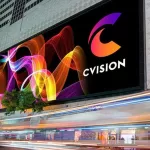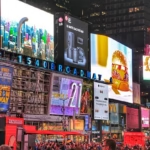
An SMD outdoor LED display uses surface-mounted RGB LED packages to deliver bright, colorful images for outdoor advertising and public information. Compared with traditional DIP technology, 3-in-1 SMD packaging brings several practical advantages. These include wider viewing angles, more consistent color mixing, higher pixel density, and a smoother display surface.
For LED display buyers, understanding these differences helps match screen technology to installation environments and viewing requirements. However, SMD packaging alone does not guarantee outdoor durability or low energy consumption. Buyers should also evaluate waterproof protection, thermal management, driving technology, and cabinet design.
This guide explains how SMD technology works, why it has become a common choice for outdoor LED advertising screens, and what to check before purchasing.
1. The Technology Shift: Why SMD Has Replaced Traditional DIP in Outdoor Displays
LED packaging technology directly affects display performance. For many outdoor applications, SMD offers a more flexible balance of image quality, viewing experience, and pixel density than traditional DIP packaging.
1.1 What Is SMD 3-in-1 LED Packaging?
SMD stands for Surface Mounted Device. It describes an electronic component mounted directly onto a printed circuit board.
In an SMD 3-in-1 LED package, red, green, and blue LED chips are integrated into one compact package. Each color can be controlled independently to produce different colors and brightness levels.
This arrangement allows the three primary colors to sit close together. As a result, viewers can perceive a more integrated image, especially at relatively short viewing distances.
Common applications include:
Outdoor advertising LED screens
Commercial building displays
Shopping mall advertising screens
Stadium perimeter displays
Transportation information screens
Outdoor event and rental LED screens
The compact package also supports smaller pixel pitches. This gives manufacturers more flexibility when designing screens for different viewing distances.
1.2 What Is Traditional DIP LED Packaging?
DIP stands for Dual In-line Package. Traditional DIP LED displays commonly use separate red, green, and blue LED components mounted through holes in the circuit board.
Each color component occupies a separate physical position. This arrangement creates a different pixel structure from SMD 3-in-1 packaging.
DIP technology has historically served outdoor display applications because of its established design and application experience. However, its relatively larger LED component arrangement can limit pixel density and affect the appearance of close-range images.
1.3 SMD vs. DIP: A Practical Comparison
The following table highlights typical differences between the two packaging technologies.
| Faktor poređenja | SMD 3-in-1 | Traditional DIP |
|---|---|---|
| LED package structure | RGB chips integrated into one package | Separate RGB LED components |
| Ugao gledanja | Generally wider | Generally narrower |
| Color mixing | More uniform at close viewing distances | Separate color sources may be more noticeable |
| Pixel density | Supports finer pixel pitches | Larger component spacing can limit density |
| Display surface | Generally flatter | More protruding LED components |
| Close-range viewing | Often more suitable | May show more visible color separation |
| Outdoor application | Widely used | Established in some traditional outdoor installations |
| Maintenance considerations | Depends on package and module design | Depends on component and module design |
SMD is not automatically superior in every outdoor operating condition. Actual performance depends on LED chip quality, package construction, optical design, driving circuits, and environmental protection.
For modern outdoor advertising screens, however, SMD offers important advantages when buyers need both wide-area visibility and detailed image presentation.
1.4 Why Buyers Should Consider SMD for Outdoor Advertising
Outdoor advertising screens often serve viewers approaching from different directions. They may also display videos, animated graphics, and detailed promotional content.
A wider viewing angle helps maintain image visibility across a larger audience area. Higher pixel density can improve image detail when people stand closer to the screen.
These characteristics make SMD a practical option for:
Shopping centers with multiple viewing directions
Building facades facing busy streets
Commercial plazas with pedestrian traffic
Retail advertising near roads and entrances
Outdoor venues with changing audience positions
The best packaging technology still depends on the screen’s pixel pitch, brightness, installation height, and expected viewing distance.

2. Key Advantages of SMD Technology: Wide Viewing Angles and Superior Color Mixing
SMD technology offers three important image-quality benefits: wide viewing angles, integrated color mixing, and a relatively smooth display surface.
These features influence how an outdoor LED screen looks from different positions.
2.1 Wide Viewing Angles for More Flexible Viewing Positions
One major advantage of many SMD LED packages is their wide viewing angle.
Some outdoor SMD LED display products specify horizontal and vertical viewing angles of 140° or more. However, this value is not universal. It depends on the LED package, optical structure, and measurement criteria.
A wider viewing angle helps viewers see content from positions away from the screen’s central axis.
For example, consider an outdoor advertising screen installed above a shopping center entrance. Pedestrians may approach from the left, right, or front. A wide viewing angle helps preserve visibility across these positions.
Buyers should check both horizontal and vertical viewing angles. They should also request viewing-angle performance data at defined brightness or contrast thresholds.
Why viewing angle matters:
It expands the effective audience viewing area.
It improves visibility for people approaching from different directions.
It supports installations in plazas and commercial streets.
It reduces the need for every viewer to stand directly in front of the screen.
A wide viewing angle does not mean image quality remains identical at every position. Color shift, brightness reduction, and contrast changes may still occur outside the central viewing area.
2.2 More Uniform RGB Color Mixing
SMD 3-in-1 packaging places red, green, and blue chips close together within one package.
This compact arrangement helps the three primary colors blend visually. It reduces the visible separation that may occur when individual color components sit farther apart.
The result can be more consistent color reproduction, especially when viewers stand relatively close to the screen.
For advertising applications, uniform RGB mixing supports:
More natural-looking images
Smoother color transitions
Better presentation of brand colors
More consistent appearance across different viewing positions
Improved display of text, graphics, and video content
However, packaging is only one factor in color performance. LED binning, calibration, driving current, grayscale processing, and module consistency also matter.
For bulk purchases, buyers should request color uniformity information and inspect sample modules or a completed display.
2.3 Higher Pixel Density and a Smoother Display Surface
SMD packages are compact. Therefore, manufacturers can arrange LED pixels more closely when designing suitable modules.
A smaller pixel pitch means a shorter distance between neighboring pixel centers. It generally supports higher pixel density and more detailed images.
na primjer:
P4 represents a nominal 4 mm pixel pitch.
P5 represents a nominal 5 mm pixel pitch.
P6 represents a nominal 6 mm pixel pitch.
P8 represents a nominal 8 mm pixel pitch.
The appropriate pitch depends on viewing distance, screen dimensions, content, and budget.
SMD packages also create a relatively flat display surface. This can improve the overall visual appearance of the screen and support close-range viewing.
2.4 How to Select the Right Pixel Pitch
Pixel pitch should match the actual viewing environment rather than simply being as small as possible.
| Primjena | Selection Consideration |
|---|---|
| Roadside advertising | Viewing distance, screen size, and traffic speed |
| Shopping center facade | Pedestrian distance and viewing angle |
| Commercial plaza | Multiple viewing positions and content detail |
| Stadium perimeter | Audience distance, refresh performance, and durability |
| Outdoor event screen | Viewing distance, rental requirements, and screen size |
A smaller pixel pitch usually increases LED quantity and manufacturing cost for a given screen area. Buyers should balance image detail with the expected viewing distance.
3. Outdoor SMD Protection Advancements: Epoxy Waterproofing and Outdoor Lamp Beads
Outdoor LED displays face rain, humidity, dust, temperature changes, and long operating hours. Therefore, outdoor protection is just as important as image quality.
An outdoor SMD LED display needs suitable protection at both the LED package and the complete screen structure.
3.1 Outdoor LED Packages and Protective Materials
Outdoor SMD LED packages may use protective encapsulation materials to protect internal components.
Epoxy resin and other suitable encapsulation materials can help shield LED chips and electrical connections from environmental exposure.
However, the material alone does not determine the final waterproof performance. Package structure, sealing quality, PCB protection, module construction, and cabinet design all contribute.
Buyers should distinguish between:
LED package protection
PCB surface protection
Module-level waterproof design
Cabinet and connector protection
Complete display system protection
A protective coating on the LED surface does not automatically make the entire screen waterproof.
3.2 Why Outdoor-Specific LED Components Matter
Outdoor LED displays operate under more demanding conditions than many indoor screens.
Direct sunlight, heat, moisture, and temperature fluctuations can affect component reliability. Therefore, outdoor LED packages should be selected according to the intended operating environment.
When evaluating outdoor SMD LED components, buyers should consider:
Encapsulation material and construction
LED chip quality and consistency
Resistance to moisture exposure
Thermal operating conditions
Brightness stability
Color consistency over time
Large LED chips are not automatically more durable or brighter. Buyers should evaluate verified electrical and optical specifications instead of relying on package size alone.
3.3 Surface Protection and Waterproofing Design
Some outdoor LED modules use additional surface protection processes. Depending on the product design, these may include protective encapsulation, conformal coating, or other sealing methods.
Certain designs also use resin-based protection over exposed areas. These methods can help reduce moisture exposure and protect vulnerable components.
However, buyers should confirm the exact protection process used in the proposed product.
A reliable outdoor LED display requires coordinated protection across the entire system:
LED package → PCB → module → cabinet → connectors and cables → installation structure
Every connection and exposed interface can become a potential entry point for moisture.
3.4 Understanding IP Ratings for Outdoor LED Displays
IP ratings describe protection against the ingress of solid objects and water under defined test conditions.
For outdoor LED displays, buyers should check the stated IP rating for the relevant screen surfaces and components.
The front and rear of a display may have different protection levels. A cabinet rating should also not be confused with the protection level of an individual LED package.
When reviewing IP claims, ask suppliers to clarify:
Which part of the display was tested?
What IP rating applies to the front surface?
What IP rating applies to the rear cabinet?
Was the complete assembled product tested?
Are test reports available?
What maintenance is required after installation?
An IP rating does not guarantee resistance to every weather condition. Proper drainage, installation angle, ventilation, cable routing, and routine inspection remain important.
4. Energy Efficiency and Heat Generation Control in Modern SMD Panels
Energy consumption affects the long-term operating cost of an outdoor LED advertising screen.
Modern LED display designs may use improved power supplies, driver ICs, brightness control, and common cathode technology to manage energy consumption and heat generation.
However, energy efficiency depends on the complete electrical and optical design.
4.1 What Is Common Cathode LED Technology?
Common cathode is a driving architecture used in some LED display systems.
In a conventional common-anode arrangement, RGB LED chips share a common positive connection. The driving circuit controls the corresponding color channels through their negative connections.
In a common cathode arrangement, RGB LED chips share a common negative connection. The driving circuit controls the positive supply for each color channel.
Because red, green, and blue LED chips can have different forward-voltage requirements, common cathode designs can supply more suitable voltages to individual color channels.
This can reduce unnecessary voltage loss in the driving system and improve power efficiency when properly implemented.
4.2 How Common Cathode Technology Can Reduce Heat
Electrical energy not converted into light contributes to heat generation.
A suitable common cathode design can reduce unnecessary power dissipation by matching the supply voltage more closely to the requirements of each color channel.
Potential benefits include:
Lower power consumption under comparable operating conditions
Reduced electrical heat generation
Improved thermal management
Potentially lower cooling requirements
Better overall operating efficiency
The actual savings depend on the LED chips, driver ICs, circuit design, brightness settings, and displayed content.
Buyers should request measured power consumption rather than assuming every common cathode screen delivers the same energy savings.
4.3 Common Cathode vs. Common Anode
| Faktor poređenja | Common Cathode | Common Anode |
|---|---|---|
| Shared connection | Common negative connection | Common positive connection |
| Color-channel control | Positive supply control | Negative-side control |
| Voltage matching | Can support color-specific voltage supply | Depends on circuit architecture |
| Energy efficiency | Can reduce unnecessary voltage loss | Depends on implementation |
| Heat generation | May reduce electrical heat under comparable conditions | Depends on electrical design |
| Primjena | Used in some energy-efficient LED display designs | Common in many conventional LED designs |
Neither architecture guarantees a particular power reduction. A meaningful comparison requires equivalent screen brightness, content, refresh settings, and measurement conditions.
4.4 Other Factors That Influence Outdoor LED Screen Power Consumption
Common cathode technology is only one part of an energy-efficient display system.
Buyers should also evaluate the following factors.
Brightness control
Outdoor screens need sufficient brightness for daytime visibility. However, operating at maximum brightness throughout the day may waste energy when ambient light levels are lower.
Automatic brightness adjustment can help match screen output to environmental conditions.
LED chip efficiency
LED chips with higher optical efficiency can produce more light from a given electrical input. Buyers should compare measured brightness and power consumption together.
Driver IC performance
Driver ICs influence current control, grayscale performance, refresh rate, and power behavior. Their performance should be evaluated as part of the complete display design.
Power supply efficiency
The power supply converts incoming electrical power into the voltages required by the display. Its conversion efficiency affects total system consumption.
Termalno upravljanje
Suitable ventilation, heat dissipation paths, and temperature monitoring help maintain stable operation. Efficient thermal design can also reduce the need for excessive cooling.
4.5 How to Evaluate Energy Efficiency Before Purchasing
Do not compare LED screens using a single maximum-power figure.
Instead, request the following information:
| Parametar | Why It Matters |
|---|---|
| Maximum power consumption | Helps estimate peak electrical demand |
| Average power consumption | Supports operating-cost calculations |
| Brightness level | Makes power comparisons meaningful |
| Common cathode or anode design | Clarifies the driving architecture |
| Power supply efficiency | Shows conversion performance |
| Operating temperature range | Helps assess environmental suitability |
| Brightness adjustment method | Shows how the screen manages changing light conditions |
For a fair comparison, suppliers should measure competing products under similar brightness, content, and operating conditions.
5. How to Choose the Right SMD Outdoor LED Display
Understanding SMD technology is only the first step. Buyers also need to match the screen configuration to the project.
5.1 Define the Viewing Distance and Pixel Pitch
Start by identifying the typical distance between the screen and its audience.
A screen beside a pedestrian walkway may need a finer pixel pitch than a large roadside billboard viewed from farther away.
Uzmite u obzir:
Closest expected viewing distance
Typical viewing distance
Screen dimensions
Content type
Installation height
Audience movement
Ask the supplier to recommend a pixel pitch based on these project conditions.
5.2 Check Brightness and Viewing Angle
Outdoor screens need enough brightness to remain visible under daylight conditions.
However, maximum brightness is not the only selection criterion. Buyers should also consider contrast, color consistency, viewing angle, and automatic brightness adjustment.
Request measured brightness data and clarify the conditions under which the viewing angle was tested.
5.3 Verify Waterproof and Environmental Protection
Ask for front and rear protection specifications. Confirm whether the stated IP rating applies to the complete assembled display or only selected components.
Also evaluate cabinet sealing, connector protection, drainage, and maintenance access.
5.4 Compare Power Consumption and Thermal Performance
Request both maximum and average power consumption.
If the product uses common cathode technology, ask for comparative test data under equivalent operating conditions.
Check whether the cabinet provides suitable ventilation and whether the system includes temperature monitoring or protective controls.
5.5 Evaluate Manufacturer Support and Quality Control
A reliable supplier should explain its product configuration and quality-control process clearly.
Before placing a bulk order, consider requesting:
LED package and chip specifications
Pixel pitch and module dimensions
Brightness and viewing-angle test data
Front and rear protection details
Power consumption measurements
Cabinet drawings and installation requirements
Sample module or display testing
Warranty and maintenance terms
Clear documentation helps reduce technical misunderstandings during procurement and installation.

6. Frequently Asked Questions About SMD Outdoor LED Displays
Q1. What is an SMD outdoor LED display?
An SMD outdoor LED display uses surface-mounted LED packages designed for outdoor screen applications. Many models use 3-in-1 RGB packaging, integrating red, green, and blue chips into one package.
This structure supports wide viewing angles, compact pixel arrangements, and consistent color mixing.
Q2. What is the difference between SMD and DIP LED displays?
SMD integrates RGB chips into a compact surface-mounted package. DIP typically uses separate red, green, and blue LED components mounted through the PCB.
SMD generally supports wider viewing angles, higher pixel density, and a smoother display surface. DIP remains relevant in certain established outdoor applications.
Q3. Do all SMD outdoor LED displays have a 140° viewing angle?
No. Some products specify viewing angles of 140° or more, but the actual value depends on package design and measurement conditions.
Buyers should check both horizontal and vertical viewing angles in the product specifications.
Q4. Is an SMD outdoor LED display waterproof?
Outdoor SMD LED displays use different protection designs to resist moisture and environmental exposure.
However, waterproof performance depends on the complete system, including the LED package, PCB, module, cabinet, and connectors. Buyers should verify the applicable IP rating and test documentation.
Q5. What is a common cathode outdoor LED display?
A common cathode LED display uses a shared negative connection for its RGB LED channels.
Its driving architecture can supply more suitable voltages to different color channels. This may reduce unnecessary power loss and heat generation when the system is properly designed.
Q6. Is common cathode technology always more energy-efficient?
Not automatically. Efficiency depends on LED chips, driver ICs, power supplies, brightness, and overall circuit design.
Buyers should compare measured average and maximum power consumption under equivalent operating conditions.
Q7. How do I choose the right pixel pitch for an outdoor SMD LED screen?
Consider the closest viewing distance, typical audience position, screen size, and content requirements.
Smaller pixel pitches provide more detail at closer distances but may increase manufacturing and procurement costs.
Q8. What should I request from an SMD outdoor LED display supplier?
Request detailed specifications for pixel pitch, brightness, viewing angle, protection rating, power consumption, cabinet structure, and maintenance requirements.
Test reports and sample modules can also help verify whether the product matches the project requirements.
Conclusion: Understanding SMD Technology Before Your Next LED Display Purchase
SMD technology has become an important solution for modern outdoor LED advertising screens. Its compact 3-in-1 RGB packaging supports wide viewing angles, more uniform color mixing, higher pixel density, and a smoother display surface.
However, packaging technology alone does not determine the performance of an outdoor LED display. Buyers should also evaluate waterproof protection, LED component quality, brightness, thermal management, and power consumption.
Common cathode driving technology can further improve energy efficiency when the electrical design supports effective voltage matching. Still, actual savings should be confirmed through comparable test data.
For a successful project, select an SMD outdoor LED display based on its complete configuration rather than one advertised feature. D-King provides LED advertising display solutions for buyers evaluating screen specifications and project requirements. Contact our team to discuss your application and request suitable product information.