Architectural lighting designers, commercial property managers, and LED display buyers frequently face a key technical decision when planning media facades and indoor window displays: “Where lies the exact operational boundary between transparent film LED screens and rigid cabinet transparent screens, and how should weight and structural complexity guide procurement?”
While traditional cabinet-based transparent LED screens provide high structural rigidity for staging and rental applications, ultra-lightweight transparent film LED display solutions eliminate heavy support frames, reduce installation labor, and allow seamless integration onto flat or curved glass surfaces.
Evaluating weight, transparency rates, structural load limits, and installation complexity allows procurement managers to select the ideal display architecture for their building media projects. This technical guide examines technical trade-offs, structural advantages, and selection criteria when sourcing a transparent film LED screen.
1. Core Architectural Differences: Flexible Film vs. Rigid Cabinet
Choosing between film-based and cabinet-based transparent screens depends on structural load limits, glass surface integration, and long-term installation complexity.
| Parameter | Transparent Film LED Screen | Transparent Cabinet LED Screen |
|---|---|---|
| Thickness & Weight | Ultra-thin design with only 1–3 mm thickness and approximately 1.0–3.5 kg/m² weight, ideal for lightweight glass installations. | Larger structural design with 50 mm+ thickness and around 12 kg/m² weight, requiring stronger mounting support. |
| Transparency Rate | Provides high transparency of up to 90%+, maintaining natural light transmission through glass surfaces. | Delivers 80%–92% transparency, suitable for applications requiring both visibility and digital display effects. |
| Surface Adaptability | Flexible structure supports flat, curved, and irregular glass surfaces, enabling creative architectural integration. | Primarily designed for flat surfaces or slightly curved structures, with limited installation flexibility. |
| Support Structure | Uses a direct adhesive installation method without additional steel framing, reducing installation complexity and visual obstruction. | Requires reinforced steel frames or supporting structures due to its heavier cabinet construction. |
| Recommended Applications | Best suited for glass curtain walls, retail storefronts, shopping malls, corporate buildings, and indoor advertising windows. | Commonly used for stage backgrounds, large outdoor displays, event rentals, and temporary media installations. |
Structural Load and Aesthetic Integration
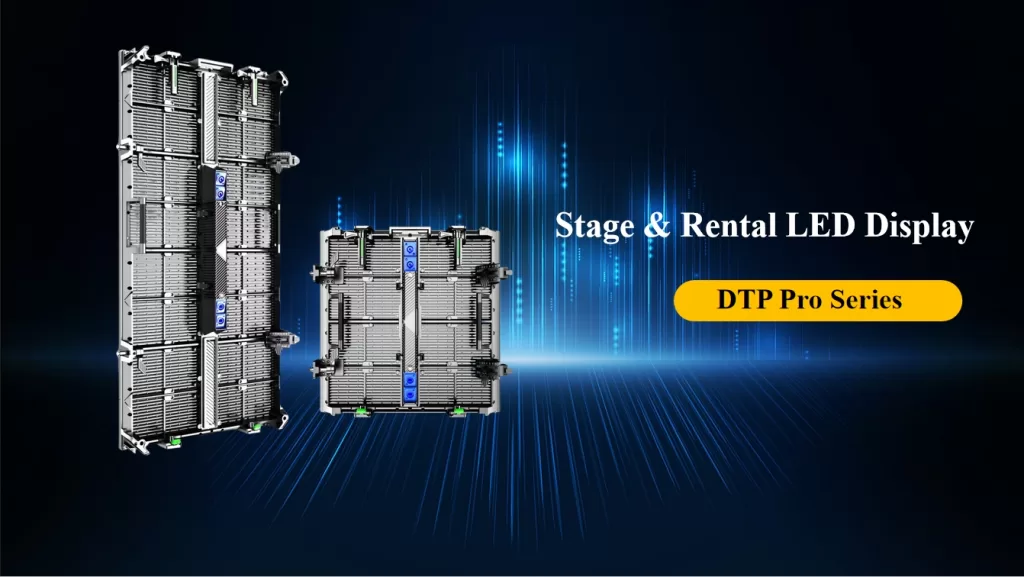
Cabinet-based transparent screens rely on aluminum alloy frames and modular sub-structures. While durable for temporary staging, their ≥ 12 kg/m^2 self-weight and structural frame require heavy steel support grids, which block natural sunlight and add installation cost when retrofitting glass facades.
Conversely, ultra-thin transparent film LED displays weigh just 1.0–3.5 kg/m^2 with a profile thickness of 1–3 mm. They adhere directly to existing interior or exterior glass surfaces without heavy structural frames, maintaining ambient indoor lighting and preserving clean building architecture.
2. Technical Features: D-King Customizable Film LED Display Engineering
D-King specialized transparent film LED display solutions offer significant weight reduction, high optical transparency, and flexible installation mechanics for commercial media facades:
Ultra-Thin, Ultra-Lightweight, and Frame-Free Installation
Engineered for direct glass adhesion, D-King film screens eliminate complex steel support structures. Bypassing heavy mounting frames reduces structural load, avoids lengthy municipal building permit processes, and cuts installation costs down to roughly 1/5 the overall expense of traditional LED screen installations.
Arbitrary Bending, Foldable Mechanics, and Full Customization
Featuring a flexible PCB and polymer substrate, the screen supports arbitrary bending and folding. This allows smooth installation across cylindrical glass towers, curved retail atriums, and complex architectural shapes that rigid cabinets cannot fit.
Anti-Glare, High Contrast, and 14–16 Bit Gray Scale Performance
Delivering dynamic 14–16-bit gray level processing and high refresh rates (≥ 3840 Hz), D-King film screens maintain smooth color transitions, deep contrast, and bright video playback. Anti-glare surface treatments optimize daytime visibility without causing mirror reflection against glass.
Self-Heat Dissipation, IP65 Waterproofing, and Fire Safety
Designed for 24-hour continuous operation, the high-transparency substrate acts as a passive heat dissipater, eliminating the need for noisy cooling fans. Built with flame-retardant materials and an IP65 waterproof rating, the film system performs reliably in demanding outdoor environments.
3. Technical Comparison: Sourcing Matrix for Project Decision-Making
Evaluating operational parameters helps engineering teams align product selection with project requirements:
| Sourcing & Engineering Metric | Transparent Film LED Screen (D-King) | Cabinet Transparent LED Screen |
| Dead Weight Load | 1.0 – 3.5 kg/m² (Ultra-lightweight) | ≥ 12 kg/m^2 (Heavy structural load) |
| Steel Structure Requirement | Zero (Direct adhesive mount) | Essential (Heavy structural steel frame) |
| Glass Curvature Fitting | Arbitrary bending; full 3D contouring | Rigid planar panels; faceted joints only |
| Total Project Sourcing Cost | Up to 80% installation & labor savings | Higher total cost (Heavy frame + crane labor) |
| Thermal & Fan Noise Profile | Passive self-heat dissipation; silent | Active cooling fans or frame heat sinks |
| Ingress & Safety Rating | IP65 waterproof & flame retardant | IP54 – IP65 depending on cabinet seals |
4. Procurement Decision Framework: Matching Display Architecture to Use Case
Logistics and procurement directors should apply the following guidelines when evaluating display options:
a. Select a Transparent Film LED Screen When:
Installing displays on existing glass curtain walls, storefront windows, or commercial atriums where adding a heavy steel support frame is impossible or cost-prohibitive.
Mounting screens onto curved, cylindrical, or irregular glass surfaces that require continuous visual flow without visible panel gaps.
Building owners demand high transparency (up to 90%+), minimal daytime visual obstruction, and fast, low-disruption installation.
b. Select a Cabinet Transparent LED Screen When:
Sourcing temporary, modular screens for stage rentals, touring concerts, or mobile event rigging that require frequent assembly and teardown.
Building standalone, free-hanging outdoor displays that do not mount directly against a supporting glass wall.
Technical Summary
Evaluating weight, mounting mechanics, and structural complexity demonstrates why the transparent film LED display is becoming the standard for modern architectural media facades. By eliminating steel support structures, offering arbitrary bending capabilities, and reducing installation costs to 1/5 that of traditional displays, flexible film screens deliver seamless architectural integration without sacrificing contrast or display performance. D-King specializes in high-transparency, ultra-lightweight, and fully customizable transparent LED film solutions for global commercial media projects.