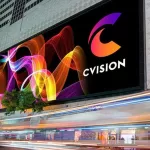
A P3.91 outdoor LED display delivers detailed images for advertising environments where audiences view screens from relatively short distances. With approximately 65,536 pixels per square meter, it provides finer image detail than many conventional outdoor LED displays. However, buyers must also consider moisture protection, impact resistance, brightness, heat dissipation, and installation costs.
Outdoor fine-pitch LED technology creates new opportunities for pedestrian streets, luxury retail storefronts, bus shelters, and premium event stages. Yet, a smaller pixel pitch does not automatically make every project more effective. The right display must match the viewing distance, ambient lighting, installation conditions, and content requirements.
This guide explains how P3.91 outdoor LED screens work, how to evaluate their protection technologies, and where their higher resolution creates measurable value.
1. The High-Definition Frontier: Understanding P3.91 Outdoor LED Displays
Pixel pitch is one of the most important specifications when selecting an LED display. It describes the distance between the centers of two adjacent LED pixels.
For a P3.91 LED display, the pixel pitch measures approximately 3.91 mm. This compact spacing allows the screen to present more image information within the same physical area.
1.1 How P3.91 Achieves High Pixel Density
The theoretical pixel density of an LED display depends on its pixel pitch.
For a square pixel arrangement, the calculation is:
Pixel density = 1 ÷ (Pixel pitch in meters)²
For P3.91:
Pixel pitch: 3.91 mm
Pixel pitch in meters: 0.00391 m
Theoretical pixel density: Approximately 65,434 pixels/m²
The commonly quoted figure of 65,536 pixels/m² corresponds to a nominal 3.90625 mm pitch, often marketed as P3.9 or P3.91.
Actual pixel density depends on the manufacturer’s exact pixel pitch and module layout.
This high density helps display fine text, product images, logos, and detailed video content. It also reduces the visible gaps between pixels when viewers stand close to the screen.
1.2 P3.91 vs. Larger Pixel Pitch Displays
A smaller pixel pitch generally improves image detail at shorter viewing distances. However, it also increases the number of pixels and electronic components required per square meter.
| Comparison | P3.91 | P4.81 | P6.67 |
|---|---|---|---|
| Pixel pitch | 3.91 mm | 4.81 mm | 6.67 mm |
| Theoretical pixel density | About 65,434/m² | About 43,225/m² | About 22,500/m² |
| Image detail | Higher | Medium-high | Medium |
| Close-range suitability | Strong | Moderate | More limited |
| Relative pixel quantity | Highest | Medium | Lowest |
These values describe theoretical pixel density, not overall display quality. LED chip quality, driving ICs, calibration, grayscale performance, and processing also affect the final image.
For buyers, the main question is not simply which pixel pitch offers the highest resolution. Instead, consider how far the audience stands from the screen and what content they need to see.
1.3 When Does P3.91 Offer a Real Advantage?
P3.91 becomes more valuable when the audience can approach the screen closely.
For example, a large outdoor billboard viewed from a distant road may not need such a fine pixel pitch. A pedestrian-facing advertising screen, however, may need to reproduce small product details and text.
A P3.91 outdoor LED screen can be suitable when a project requires:
Detailed promotional images and brand graphics.
Readable text at relatively short viewing distances.
High-quality video playback.
A premium visual experience in public spaces.
A balance between outdoor visibility and image definition.
Buyers should compare the additional investment with the actual viewing conditions before selecting a fine-pitch solution.
2. Close-Range Viewing Distance (3.9m+) for Pedestrian Streets
Viewing distance determines how clearly audiences perceive individual pixels. It is therefore an important factor when choosing an outdoor LED display.
For P3.91, approximately 3.9 meters is a commonly used minimum viewing-distance reference. At this distance, individual pixels generally become less noticeable to many viewers.
However, this figure is a guideline rather than a guaranteed threshold. Individual eyesight, content design, screen calibration, and ambient conditions can change the viewing experience.
2.1 Why Viewing Distance Matters
When viewers stand too close, they may notice the individual LED pixels. This effect can make text edges and image details appear less continuous.
A smaller pixel pitch reduces the distance between pixels. As a result, the display can provide a smoother image from a shorter viewing distance.
For pedestrian advertising, this advantage matters because audiences often walk past screens at different distances.
A P3.91 screen can help advertisers present:
Product details and promotional messages.
Brand logos and visual identities.
Retail campaign videos.
Animated graphics and dynamic advertisements.
High-resolution images in public environments.
2.2 Suitable Applications for Close-Range Viewing
Pedestrian shopping streets
Pedestrian streets often place digital advertising screens near sidewalks, storefronts, and public seating areas. Visitors may view content from several meters away or even closer.
P3.91 can help maintain image detail in these environments. It is particularly useful for campaigns featuring product photography, text, and brand visuals.
Commercial plazas
Commercial plazas combine pedestrian traffic with large advertising surfaces. People may approach the display while waiting, shopping, or meeting others.
A finer pixel pitch can improve the visual experience when the installation allows close access.
Retail storefronts
Storefront displays often communicate product information and brand positioning. Luxury retailers may use detailed imagery to support premium visual presentation.
P3.91 can help reproduce product textures, logos, and campaign graphics more clearly than larger-pitch alternatives at comparable viewing distances.
2.3 How to Evaluate the Actual Viewing Distance
Before ordering a P3.91 outdoor LED display, buyers should assess the following factors:
| Evaluation Factor | Key Question | Why It Matters |
|---|---|---|
| Minimum viewing distance | How close can visitors approach? | Determines the required pixel pitch |
| Main viewing distance | Where do most viewers stand? | Helps optimize image definition |
| Content type | Will the screen show text, images, or video? | Fine details need better resolution |
| Screen dimensions | How large is the installation? | Affects viewing angles and image composition |
| Ambient lighting | Is the screen exposed to direct sunlight? | Influences brightness requirements |
| Installation position | Is it wall-mounted, freestanding, or suspended? | Affects viewing height and accessibility |
For complex projects, request a sample or arrange a demonstration at the intended viewing distance. This provides a more reliable assessment than relying on pixel pitch alone.
3. Protection Challenges in Outdoor Fine Pitch Displays (GOB/SMD Technology)
Outdoor fine-pitch displays require careful protection because their LED components face moisture, dust, temperature changes, and potential physical impact.
A smaller pixel pitch does not automatically mean the display is fragile. However, dense LED layouts create additional requirements for module protection, manufacturing quality, maintenance, and installation.
3.1 Why Outdoor Fine-Pitch Displays Need Better Protection
Outdoor LED displays operate in environments that can expose modules to several risks.
Moisture and humidity
Rain, condensation, and humid air can affect electronic components. Water ingress may cause corrosion, electrical faults, or unstable display performance.
Dust and pollution
Dust can accumulate around LED components and connectors. In industrial or roadside environments, airborne particles may also contain corrosive substances.
Physical impact
Public installations may experience accidental contact, cleaning damage, or impacts from nearby objects.
Temperature changes
Repeated heating and cooling can affect materials, seals, connectors, and electronic components.
These risks make protection design an important purchasing consideration. Buyers should evaluate the complete cabinet and module protection system rather than focusing on the LED surface alone.
3.2 SMD Technology: A Common Outdoor LED Packaging Solution
SMD stands for Surface-Mounted Device. It is widely used in LED display manufacturing.
In an SMD LED display, multiple LED chips are packaged into compact surface-mounted components. Manufacturers then mount these components onto PCB modules.
Key characteristics include:
Established manufacturing processes.
High-quality color reproduction.
Flexible pixel pitch options.
Mature module maintenance procedures.
Broad availability across LED display applications.
However, conventional SMD packages expose their surfaces to the installation environment unless additional protection is applied.
For outdoor projects, buyers should verify the module’s protection design, waterproofing measures, cabinet sealing, and environmental test results.
3.3 GOB Technology: Additional Surface Protection
GOB stands for Glue on Board. It refers to a protection process that applies a transparent protective material over the LED module surface.
The material forms a protective layer around the LED components. Depending on the manufacturing process, it can help reduce exposure to moisture, dust, and physical contact.
Potential benefits include:
Improved surface protection.
Reduced risk of damage from accidental contact.
Better resistance to dust and moisture exposure.
Additional protection for densely arranged LED components.
Improved suitability for selected public-facing installations.
However, GOB does not make an LED display completely waterproof or impact-proof.
Its performance depends on material quality, coating thickness, application consistency, curing conditions, and module construction.
3.4 GOB vs. Conventional SMD: What Should Buyers Choose?
| Evaluation | Conventional SMD | GOB-Protected SMD |
|---|---|---|
| LED packaging | Surface-mounted LED packages | Surface-mounted LEDs with an additional protective layer |
| Surface protection | Depends on module and cabinet design | Additional protection over the LED surface |
| Moisture resistance | Depends on sealing and protection design | May improve surface-level moisture protection |
| Impact resistance | Depends on LED package and module structure | May reduce damage from certain surface impacts |
| Maintenance | Individual component repair is generally more accessible | Repair may require additional processes |
| Manufacturing requirements | Established standard process | Requires additional coating and quality control |
GOB is worth considering for pedestrian-facing screens and installations with higher contact risks.
Conventional SMD may remain suitable for applications where the screen is mounted out of reach and the overall environmental protection system meets project requirements.
3.5 What Protection Specifications Should Buyers Verify?
Do not select an outdoor fine-pitch display based on the words waterproof or impact-resistant alone.
Ask the supplier for specific evidence.
A practical evaluation checklist includes:
Front and rear IP protection ratings.
Module-level and cabinet-level sealing methods.
GOB material specifications, if applicable.
Moisture and humidity test reports.
Temperature cycling test results.
Surface impact test conditions.
Connector and cable protection details.
Maintenance and module replacement procedures.
An IP rating describes protection against defined solid-object and water ingress tests. It does not guarantee resistance to every outdoor condition.
For installations exposed to heavy rain, coastal air, or frequent cleaning, the complete display structure requires additional evaluation.
4. Brightness vs. Thermal Control in Ultra-Dense Outdoor Panels
Outdoor LED displays must remain visible under changing lighting conditions. At the same time, high brightness and dense electronic components create heat-management requirements.
For P3.91 outdoor LED displays, manufacturers must balance brightness, power consumption, cabinet ventilation, and long-term operating stability.
4.1 Why High Brightness Requires Thermal Management
Outdoor displays often operate under direct sunlight. Their brightness must be sufficient to maintain clear images in bright environments.
However, increasing LED brightness generally increases power consumption and heat generation.
When a display operates at high brightness for extended periods, insufficient heat dissipation can create several problems:
Higher operating temperatures.
Increased thermal stress on electronic components.
Potential brightness and color inconsistency.
Reduced component lifespan under excessive heat.
More frequent thermal protection events.
The exact impact depends on LED efficiency, driving conditions, cabinet design, ambient temperature, and operating settings.
4.2 How to Balance Brightness and Heat Dissipation
A reliable outdoor display requires more than high brightness specifications.
Buyers should evaluate the following design elements.
1. Efficient LED components
LED efficiency influences how much electrical power becomes visible light and how much becomes heat.
Higher-efficiency components can help reduce unnecessary power consumption. However, actual performance should be verified through product specifications and operating tests.
2. Cabinet ventilation
A well-designed cabinet supports effective heat transfer.
Depending on the cabinet structure, manufacturers may use natural convection, fan-assisted ventilation, or other thermal management solutions.
The appropriate method depends on cabinet dimensions, installation orientation, ambient temperature, and operating conditions.
3. Thermal monitoring
Temperature monitoring helps manufacturers identify abnormal operating conditions.
Some systems support temperature alarms, brightness adjustment, or protective shutdown functions.
Buyers should confirm which thermal protection features are included in the actual configuration.
4. Automatic brightness adjustment
Ambient light sensors can help adjust display brightness according to surrounding lighting conditions.
During daylight, the screen can increase brightness when necessary. At night, it can reduce brightness to improve viewing comfort and limit unnecessary power consumption.
This function can also support more efficient operation.
4.3 Important Thermal and Brightness Specifications
When comparing outdoor fine-pitch LED screens, request the following information:
| Specification | What to Check | Purchasing Value |
|---|---|---|
| Maximum brightness | Measured brightness under specified conditions | Evaluates daytime visibility |
| Typical brightness | Normal recommended operating level | Helps estimate practical power consumption |
| Refresh rate | Actual configured refresh rate | Supports smooth video and camera recording |
| Grayscale performance | Performance at different brightness levels | Helps preserve image detail |
| Maximum power consumption | Power demand under specified conditions | Supports electrical planning |
| Average power consumption | Typical operating power under defined content and settings | Helps estimate operating costs |
| Operating temperature | Manufacturer’s specified working range | Evaluates environmental suitability |
| Thermal protection | Monitoring and protection functions | Helps manage overheating risks |
Maximum brightness and average power consumption should not be confused. Real operating demand varies with content, brightness settings, and display configuration.
4.4 Preventing Long-Term Brightness Degradation
LED displays can experience brightness degradation over time. Heat, operating current, component quality, and environmental exposure all influence the process.
Buyers can reduce avoidable thermal stress through several measures:
Avoid unnecessary continuous operation at maximum brightness.
Use automatic brightness adjustment where available.
Keep ventilation paths clear.
Inspect cabinet fans and filters when applicable.
Monitor abnormal temperature changes.
Follow the manufacturer’s recommended operating settings.
Schedule regular inspection and cleaning.
For large outdoor installations, thermal performance should be evaluated under realistic operating conditions rather than relying only on laboratory specifications.
5. Ideal Applications: Luxury Retail Storefronts, Bus Shelters, and Stage Rentals
P3.91 outdoor LED displays offer the greatest value when audiences view content from relatively short distances and image detail directly affects the advertising experience.
However, not every outdoor advertising project needs a fine-pitch screen. Buyers should match the pixel pitch to the audience’s position, screen size, content, and budget.
5.1 Luxury Retail Storefronts
Luxury retail stores often use digital displays to communicate brand identity and product value.
Their content may include detailed product photography, fashion campaigns, animated graphics, and promotional videos.
A P3.91 outdoor LED display can help reproduce these visuals with greater detail at close viewing distances.
Potential benefits include:
Clearer product images.
More detailed brand graphics.
Better presentation of visual campaigns.
Stronger engagement in pedestrian areas.
Flexible content updates for seasonal promotions.
For luxury storefronts, buyers should also evaluate cabinet appearance, screen flatness, color consistency, and installation integration.
A premium display should complement the building design rather than appear as an unrelated advertising structure.
5.2 Bus Shelters and Public Transportation Areas
Bus shelters create a different viewing environment.
Passengers may stand close to the screen while waiting. Pedestrians and passing traffic may also view the content from different angles and distances.
P3.91 can support detailed advertising content in these relatively compact spaces.
However, transportation installations require particular attention to environmental protection.
Important considerations include:
Rain and moisture exposure.
Dust accumulation.
Public contact and accidental impact.
Ambient brightness changes.
Maintenance accessibility.
Electrical safety and cable protection.
GOB-protected modules may be worth evaluating for installations with higher surface-contact risks.
Nevertheless, the complete cabinet protection rating and structural design remain essential.
5.3 Premium Outdoor Stage Rentals
Outdoor stage displays serve audiences at different distances. Some viewers stand near the stage, while others watch from farther away.
P3.91 can be suitable for premium stage applications where close-range image detail matters.
Potential uses include:
Corporate events.
Product launches.
Fashion shows.
Brand activations.
Outdoor exhibitions.
Premium entertainment events.
Rental buyers should consider more than pixel pitch.
Cabinet weight, locking systems, installation speed, maintenance access, structural requirements, and transport efficiency also affect project costs.
For large venues, a mixed-pitch solution may be more economical. Fine-pitch panels can serve closer viewing zones, while larger-pitch screens may cover distant audiences.
5.4 P3.91 vs. Larger Pixel Pitch: Application Selection
| Application | P3.91 Suitability | Key Consideration |
|---|---|---|
| Luxury retail storefront | High | Close viewing and detailed brand content |
| Pedestrian shopping street | High | Audience distance and screen placement |
| Bus shelter | High, subject to protection design | Moisture, public contact, and maintenance |
| Premium outdoor stage | High for close viewing zones | Rental structure and viewing layout |
| Large roadside billboard | Project-dependent | Typical viewing distance and cost |
| Large outdoor stadium | Project-dependent | Audience distance and total screen size |
| Distant highway advertising | Often unnecessary | Larger pixel pitch may offer better value |
The best solution depends on the actual audience distance rather than the application name alone.
5.5 A Practical Buyer Checklist for P3.91 Outdoor LED Displays
Before confirming an order, buyers should evaluate the following areas.
Display performance
Exact pixel pitch and resolution.
Maximum and recommended brightness.
Refresh rate and grayscale performance.
Color consistency and calibration.
Viewing angle specifications.
Environmental protection
Front and rear IP ratings.
SMD or GOB protection structure.
Moisture and dust protection.
Temperature and humidity test results.
Surface impact protection where required.
Thermal management
Cabinet ventilation design.
Fan-assisted or natural cooling configuration.
Temperature monitoring.
Brightness adjustment functions.
Operating temperature range.
Installation and maintenance
Cabinet dimensions and weight.
Mounting and structural requirements.
Power and signal connections.
Front or rear maintenance access.
Spare module availability.
Warranty and technical support terms.
Project economics
Initial equipment cost.
Installation and structural costs.
Power consumption.
Maintenance requirements.
Expected operating schedule.
Long-term replacement and service costs.
A supplier should provide clear technical documentation for the actual configuration. Buyers should compare complete project costs rather than evaluating the price per square meter alone.
Frequently Asked Questions About P3.91 Outdoor LED Displays
1. What is the pixel density of a P3.91 outdoor LED display?
A nominal P3.91 LED display has approximately 65,434 pixels per square meter. A nominal 3.90625 mm pitch corresponds to approximately 65,536 pixels per square meter.
The exact density depends on the manufacturer’s actual pixel pitch and module design.
2. What is the recommended viewing distance for a P3.91 LED screen?
Approximately 3.9 meters is a commonly used minimum viewing-distance reference. However, the ideal distance depends on content, eyesight, screen calibration, and viewing conditions.
Buyers should evaluate the screen at the actual installation distance before confirming the pixel pitch.
3. Is P3.91 suitable for outdoor advertising?
Yes. P3.91 can support outdoor advertising where audiences view the screen relatively closely.
Suitable applications may include retail storefronts, pedestrian streets, bus shelters, and selected outdoor event installations.
The display must also meet the project’s brightness, protection, and thermal management requirements.
4. Is a GOB LED display better than a conventional SMD display?
GOB adds a protective layer over the LED module surface. It can improve resistance to certain types of surface contact, dust, and moisture exposure.
However, GOB does not automatically guarantee complete waterproofing or impact protection. Buyers should compare test results, maintenance requirements, and total module construction.
5. Does a smaller pixel pitch mean higher power consumption?
Not necessarily in every configuration. However, a smaller pixel pitch generally means more pixels and electronic components per square meter.
Actual power consumption depends on LED efficiency, brightness, driving conditions, content, and cabinet design. Request both maximum and average power specifications.
6. Can a P3.91 outdoor LED display operate under direct sunlight?
Yes, provided the display has sufficient brightness and appropriate environmental protection.
Buyers should verify measured brightness, automatic brightness adjustment, thermal performance, and the manufacturer’s operating temperature range.
7. Is P3.91 worth the additional investment?
P3.91 is worth considering when close-range image detail is important to the project.
For distant viewing applications, a larger pixel pitch may provide better cost efficiency. The final choice should balance visual requirements, installation conditions, and the total project budget.
Conclusion: Choosing the Right P3.91 Outdoor LED Display
A P3.91 outdoor LED display offers high pixel density and detailed image reproduction for advertising environments with relatively short viewing distances. Its advantages are particularly relevant to luxury retail storefronts, pedestrian streets, bus shelters, and premium stage installations.
However, resolution alone does not determine project success. Buyers must also evaluate moisture protection, surface impact resistance, brightness, thermal management, installation structure, and long-term maintenance.
GOB protection can provide additional surface protection, while effective cabinet sealing and thermal design support reliable outdoor operation. The best configuration depends on the actual environment and project requirements.
Before selecting a display, define the audience’s viewing distance, content type, ambient lighting, and maintenance conditions. Then compare technical specifications and supporting test documentation from qualified suppliers.
D-King supplies LED advertising display solutions for different commercial applications. Contact our team to discuss your screen dimensions, installation environment, viewing distance, and customization requirements.